
The “Waiting for Godot” theory of the lackluster recovery
SAO PAULO | By Marcus Nunes | Regarding the economic recovery… from Robert Samuelson (explaining Edward Lambert´s AS/ED, that´s Aggregate Supply/Effective Demand, theory).

SAO PAULO | By Marcus Nunes | Regarding the economic recovery… from Robert Samuelson (explaining Edward Lambert´s AS/ED, that´s Aggregate Supply/Effective Demand, theory).

MADRID | By Francisco López | Mark your calendars. For the first time in quite some time two major events for the future of markets and EU’s banking union are taking place in less than a month: the Fed’s meeting next Wednesday and the German elections on September 22. Is the tapering starting and by how much? Will Angela Merkel have to find a new political partner?

MADRID | By Santiago Graiño Knobel via BBVAOpenMind | A market where the user is not the customer seems crazy, not to say perverse, seems impossible since it distorts the logical responsibilities of exchange and conceals the interests at stake, but the fact is that it does indeed exist: it’s the media. Recipients pay nothing, or amounts that usually do not even cover half the cost, and the media are owned by profit-making companies. And that, the author believes, leads to many problems.

BEIJING | By Wu Yuci via Caixin Magazine | After the Internet, credit and gold bubbles, education could be the next. Parents afraid for their children’s futures are behind the latest investment fever, and the damage from failed speculation will be immense.
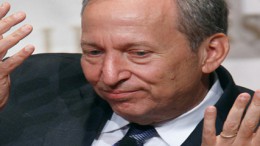
MADRID | By The Corner Team | Ibex 35 exceeded 9,000 points and markets were all in green this morning thanks to the withdrawal of Larry Summers as Bernanke’s substitute.
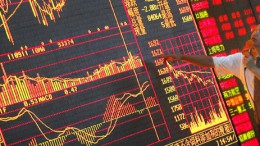
By Ray Kwong | China’s economy went from chump to champ in 30 years, with growth rates averaging 10% over three decades. To be sure, there are major downward shifts underway, but predictions that the Chinese economy will go down in flames—whether by crash, hard landing or [your favorite term here]—is crazy. Some detractors even foresee an economic apocalypse, one in which China will repeat Japan’s “lost decade” of stagnation.

With an annual GDP growth rate of 5.8 percent over the past two decades, reaching 6.1 percent in 2011-12, India has become one of the world’s fastest-growing economies. But is also witnessing an unprecedented demand for energy and a growing deficit in power supply. Government’s efforts to tackle energy poverty are having a big impact, but is it enough?
BARCELONA | By Joan Esteban | This essay deals with trends in economic theory over the past few decades. It is unabashedly subjective and partial. It does not attempt to provide an exhaustive panoramic view of current research in economics. Rather, I have chosen to focus on some of the recent developments that have tried to relax the highly restrictive assumptions under which General Equilibrium Theory (GE) had been built over the second half of the twentieth century.

NEW YORK | By Ana Fuentes | America’s economy is recovering at a slow but firm pace: mortgages, the car industry, consumption, all show better figures than last year. However, the last jobs report brings a huge problem on the table: teen unemployment is still too high. More than 10 million youth are unable to find full-time work, and that’s a ticking bomb, experts warn.
NEW YORK | By Ana Fuentes | Thinking of moving abroad? You might consider that Denmark, Norway and Switzerland are the most satisfied countries, according to the World Happiness Report 2013. However, Europe has a gloomy side called austerity: rankings for Greece, Italy, Portugal and Spain have dramatically plummeted because of the impact of the euro zone crisis.