
Reported by Juan J. Fdez-Figares
In another session of high volatility, the main European stock indices closed mixed yesterday, well below their intraday highs. Whilst a slight fall in oil prices in the morning helped to boost equity markets and stabilise the region’s bond markets, in the afternoon, the fall in US bond prices and the sharp rise in their yields – the 30-year Treasury bond closed at 5.18%, its highest level since July 2007 – driven by investor fears that inflation in the country will continue to rise, also dragged European bond prices down and triggered a further rise in their yields, which in turn dragged equities down, particularly growth stocks, whose theoretical valuations are penalised by the rise in risk-free interest rates – typically the 10-year bond yield is used.
At sector level, the worst-performing sectors/stocks on European stock markets yesterday were those related to mineral commodities, weighed down by falling prices for these inputs, which maintain a high inverse correlation with the dollar—a currency that appreciated sharply during the session—as well as those in the materials and construction sectors, the chemical sector and the automotive sector. Profit-taking also continued in stocks related to the development of Artificial Intelligence (AI), particularly in semiconductors. Conversely, healthcare, food, media and telecommunications companies were the best performers.
On Wall Street, the main US stock indices, after trading in negative territory all day, closed the session with significant declines, not far from their daily lows, with the Nasdaq Composite leading the falls, weighed down by the poor performance of major technology stocks – in this market, semiconductors, after starting the session down again, partially turned upwards, to close mixed. It is worth noting that this index, after hitting successive all-time highs, has fallen by almost 3% over the last three sessions. In this market, it was the renewed sell-off in bonds and the resulting rise in their yields that acted as the main drag on equities. The fear, as we have already pointed out, that inflation will continue to rise as a result of rising energy prices—something we saw last week is already happening following the publication in the US of the April CPI and PPI figures—has triggered a rush to sell bonds, thereby making financing more expensive for all companies.
Today’s macroeconomic agenda features the release of April’s inflation figures for the Eurozone and the UK. In the former, the figure is expected to match the preliminary reading, which showed a further rise in inflation for the month. In the case of the UK, analysts project that both headline and core inflation will have moderated slightly during the month in question, following the sharp rise seen in March. Furthermore, later this afternoon in the US, the minutes of the Federal Open Market Committee’s (FOMC) latest meeting (March) will be released; at that meeting, the Federal Reserve (Fed) kept its key interest rates unchanged. What will be truly significant is gaining an insight into the committee members’ differing views on the next steps to be taken regarding monetary policy, particularly following the recent rise in inflation – something the new Fed chairman, Kevin Warsh, will need to take note of, as he is due to be sworn in next Friday.
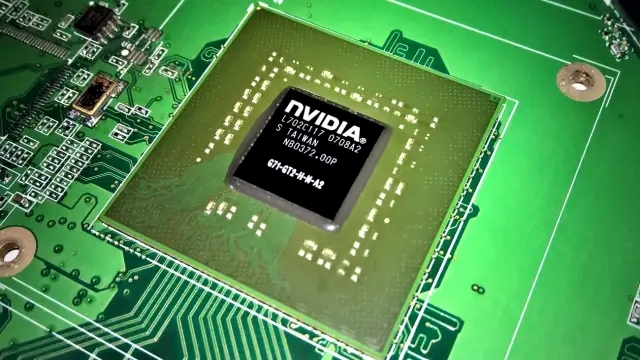
Elsewhere, and with regard to the corporate calendar, today’s highlight is the publication of the results of the technology multinational Nvidia for Q1 2027. The company is expected to have achieved strong increases in sales and profits over the period, although the most significant aspect will be hearing what its management has to say about the future trend in demand for its products and for everything related to AI development. Investors’ expectations are very high, so Nvidia will need to be convincing. The performance of the stock markets, at least in the short term, will depend largely on the reaction of its shares following the results release.
To begin with, we expect the main European stock indices to open lower today, following in the wake of Wall Street yesterday and the Asian markets early this morning, where South Korea led the falls after it emerged that Samsung had broken off negotiations with its workers, making it increasingly likely that they will go on strike. Subsequently, it will once again be the news filtering through regarding the Middle East peace negotiations and their effect on oil prices – and, consequently, on bond yields – that will determine the trend taken by European stock markets at the close of trading. In this regard, it is worth noting that Chinese President Xi described ending the war in Iran as a matter of “utmost urgency” earlier this morning. Given his influence over Iran, this could prove positive for the progress of peace negotiations in the region.
Elsewhere, it is worth noting that early this morning the dollar is holding steady against other major currencies; that bond prices and yields are showing little change; that oil prices are falling slightly, as are gold prices; and that the prices of the main cryptocurrencies are rising moderately.


