
Scarier than one billion euros of debt is what auditors could find
MADRID | Alex García


MADRID | Alex García

MADRID | The Corner | Central bankers are meeting this week in Jackson Hole to talk about employment and its weakness in general terms. Unlike what is happening in Europe, US and UK are seeing improvement in employment (their unemployment rates have decreased from 10% to 6.2% and from 8.4% to 6.4%, respectively) with the curiosity that they’re not coming with wage increases. In fact, last British data shows the first fall since 2009. This circumstance means less inflationary pressures, therefore Bankinter analysts think that central banks will not start to tense its monetary policy until wages begin to invigorate, something that will take some months to arrive.
MADRID | By J. J. Fdez-Figares (LINK) | Stock markets face today a new week in which geopolitical conflicts, especially in Ukraine, and macroeconomic data that will be announced during the day will monopolize the attention of investors. Although we expect trading volumes remain low, typical of summer dates, we do expect a slight rise in volatility, especially given the current stage of confusion, both in the geopolitical and economic environment that financial markets are facing.

MADRID | The Corner | The European weak economic growth increases the pressure on the ECB to take additional measures or the long-awaited QE to boost growth, beyond those already announced in June and of which the effects probably will not be seen until 2015. At the moment the ECB in its monthly report reemphasized that there is “a continued moderate and uneven recovery of the euro area economy”, with low inflation rates and a weak monetary and credit evolution. At the same time, inflation expectations for the euro area in the medium and long term remain firmly anchored in line with the ECB’s target of keeping the inflation rates at levels below but close to 2%.
MADRID | By J. J. Fdez-Figares (LINK) | The main European and American stock markets closed yesterday up in a new session with low activity and reduced volatility, where the investors interpreted the words of the Russian President Putin, in his speech in Crimea, as an attempt to avoid the international isolation of his country as a result of their involvement in Ukraine. Yesterday again the macroeconomic figures published in the Eurozone surprised negatively because to the shrinking economic growth in Germany in the 2Q 2014, the first produced since 1Q 2012 during the euro crisis, the stagnation of the French economy and in the whole of the eurozone during the same period – the German and French economies account for about 50% of the Eurozone.

MADRID | The Corner | Spain’s GDP expanded by 0.6% in the 2Q of 2014 over the previous quarter, the fastest pace in the Eurozone after Latvia’s growth (+1%). With Portugal (+0.6%) and Netherlands (+0.5%), Spain becomes one of the best economic performers in the eurozone during this quarter. Moreover, according to the figures published today by Eurostat, the Euro area has stalled in the 2Q, especially as a result of the contraction of Germany, the Italian fall into recession and France’s stagnation. Meanwhile, the Greek economy contracted by 0.2%, the lowest drop since 3Q 2008 and it could show that the country is meeting its full year growth target of 0.6% for 2014.

BERLIN | Alberto Lozano | Some figures were already announcing during the last weeks that Germany was losing momentum. Its equity market also was the 3rd worst performer since the European market peaked on June 10th, so the GDP fall of 0.2% in the largest economy of the Euro area is not a surprise. A negative effect from the balance of exports and imports and a fall in construction are the main causes for this slight GDP decrease. However, both households and government consumed slightly more than in the previous quarter. Therefore, growth in consumption and imports might be a positive signal for the Europe’s largest economy in the coming quarters of 2014.
MADRID | By J. J. Fdez-Figares (LINK) | European and American stock markets closed yesterday up in a session of low activity and volatility. The good performance of Western stock markets occurred despite the set of macroeconomic figures published during the day in China, Europe and the USA, which pointed again to a global slowdown in economic growth. The only explanation we can find to the good performance of stock markets yesterday is precisely that investors have interpreted that as long as the growth of these economies remain weak, the central banks will be forced to maintain its current policy of monetary expansion, which provide liquidity to the system, something that equity markets consider positive.
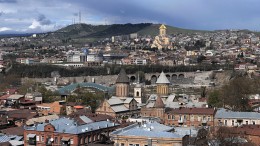
MADRID | By Ángel Maestro | August arrived with the positive outcome that the IMF Executive Board will support the economic reform program in Georgia with 154 million Stand-By dollars. Among the economic measures, paradoxically, to reduce the dollarization in favour of the home currency and the euro, in order to accelerate its economic and political stabilization process. Concerning the second is the macro-judicial processes that will begin this Saturday against its former President Mikheil Saakashvili in relation to abuse of power charges which have driven numerous concerns by several worldwide institutions and non-governmental organizations.