
Markets

banksjapan

Japanese Banks Are Back

The Corner Team via the Bank for International Settlements (BIS) | Japanese banks have recently become once again the biggest suppliers of cross-border bank credit, as they used to be in the 80s. The severe banking crisis of the 1990s, along with banking deregulation in the archipelago, reversed their expansion, the last BIS report points out. Their market share reached a low in 2007 before rebounding.


twitterIPO

Twitter IPO: much expected, little known

NEW YORK | By Ana Fuentes | In a less-than-140-characters tweet, Twitter announced its much-anticipated IPO on Thursday. The social network, which has over 200 million users, filed confidential paperwork so nobody really knows its value or how fast it’s really growing. Some analysts put its value at around $10 billion, others up to $16bn. All bets are on.


No Picture

John Taylor & Bob Hall get it backward

SAO PAULO | By Marcus Nunes | In a recent post John Taylor leans on Bob Hall to criticize NGDP Targeting. He goes: “In his paper at the recent Jackson Hole conference, Bob Hall criticized nominal GDP targeting, citing his 1994 paper with Greg Mankiw. Bob argues that “A policy of stabilizing nominal GDP growth would require contractionary policies to lower inflation when productivity growth is unusually high. Such a policy might easily trigger a spell at the zero lower bound.”


No Picture

La vie en gris: France to miss deficit-reduction targets in 2013

MADRID | By The Corner Team | Under pressure from the EU and the IMF, France has revised its public deficit forecasts.  Europe’s second big economy is struggling with weak activity and high unemployment. Paris said it will take advantage of an extra two years granted by the European Commission to put its finances back on track.


royalmail

UK Royal Mail: From Henry VIII to the Stock Exchange

LONDON | By The Corner Team | It will be the U.K.’s  largest public offering in decades. London plans to sell a majority of its stake in the Royal Mail, the biggest icon of British public companies that not even Margaret Thatcher dared to privatize. The sell-off to begin “in the coming weeks”, as the government announced on Thursday. But so will strikes.


Lehman Brother collapse

5 years since Lehman Brothers collapsed

MADRID | By JP Marin Arrese | In the aftermath of the world financial crisis, the G 20 solemnly committed itself to undertake a major overhaul to avoid such a disaster from happening again. The diagnosis rapidly identified a disproportionate risk appetite, coupled with lenders’ reckless confidence, as the main culprit. Deregulation and the benign neglect hailed by supervisory authorities as a hallmark for best practices also stood in the pillory. Yet, five years later, no major breakthrough in dealing with the core problems has been performed.


china

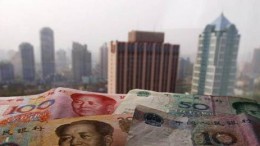
China’s New Experiment: Financial Equality

Iris Mir | China starts a new round of economic experimentation. Shanghai is set to become the new engine of growth with a China’s first Free Trade Zone (FTZ). The goal is to attract foreign investment by testing new deregulation rules that should give foreign companies greater flexibility. But urgent reforms in other areas are a must in order to transform the rise of the income of Chinese households into real purchasing power.


Europe Tobin Tax

Europe’s financial tax plan hits wall

LONDON | Via Presseurop | ‘The EU’s controversial “Tobin Tax” on financial transactions has been dealt a severe blow after the EU Council’s legal service judged the proposal “infringes” EU treaties and is “discriminatory” to states which do not take part, reports the Financial Times.


No Picture

Public cost of the Spanish financial crisis amounts to 5.9% of GDP

MADRID | By Carlos Díaz Güell | According to the Bank of Spain, the public aid for the recapitalisation of the Spanish financial system between 2009 and 2013 amounts to €61.366 billion (£51.739bn), 5.9% of the GDP. This is below the average cost of other banking crisis since 1970. In the late 1970s and early 1980s the public cost of the financial crisis was of 3.9% of the GDP.