Markets


No Picture

RBS’ Mariano Aldama: “Spain’s new government can bring back markets’ trust”

Mariano Aldama of the Royal Bank of Scotland and responsible for capital market origination for financial institutions in Spain and Portugal, has given an interview to the business daily Cinco Días in which he admits that, despite the critical situation of Spain because of excessive financing costs, it is possible to restore market confidence. We offer an excerpt of the interview. How long can the banking system resist without financing itself? The rejection in the markets can not last much longer but first there are pieces of the puzzle that…


No Picture

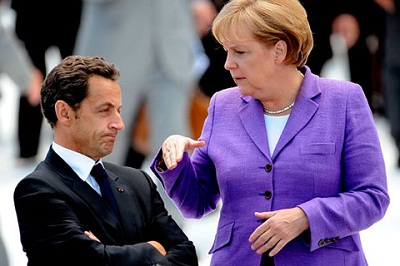
“Merkel will soften her stand”

By Alfredo Aranda, in Madrid| The proposal to centralise fiscal policies in the euro zone is perhaps the only initiative that has received the almost unanimous agreement of the EMU members, although it remains to be seen how it can be articulated. At Agenbolsa, analyst Paula Hausmann considers that this is a good option to restore confidence in the euro and stabilise shaken bond markets. But the big question remains: will…


No Picture

Union Bancaire Privée: “let’s go for austerity but beware of inflation”

According to Patrice Gautry, UBP’s chief economist, we are now at the end of a cycle. The West’s growth rate has kept one step ahead of the spiral of debt that was fuelling it, but now we have reached the end of that road: household and national debt needs to be reduced. “As testified by the frantic talks among leaders, the mounting political and economic threats unequivocally call for higher…


No Picture

Bankinter: “Germany has too much to lose if the euro breaks down”

By Consenso del Mercado | After the difficulties Germany experienced in placing its bonds last week, it seems to have somehow relaxed its official position and be willing to let the ECB buy the required massive amounts of sovereign debt, even though under certain conditions. In this regard, Spanish Bankinter analysts argue that Germany is the country that would be the least interested in a euro breaking down. Here´s why….


No Picture

Markets force Italy to pay two-year credit at 7.8pc interest rate

By Europa Press | The Italian Treasury on Friday placed €10 billion in two debt auctions, one due at six month and the other at twenty four months. Yet, it has been forced to provide record interests: 6.504% and 7.814%, respectively. Specifically, Italy’s Treasury sold €8 billion in bonds with six-month maturity for which they had to offer a record yield of 6.504%: 84% more than in the previous auction…


No Picture

Morgan Stanley: “French, Italian banks lead ECB lending demand”

The Spanish investment website Consenso del Mercado published on Friday this revealing note and table from Morgan Stanley about the ECB loans. “The deterioration of the euro zone crisis makes very difficult the necessary deleveraging process, which is estimated at €1.5 to 2.5tr during the next 18-24 months. The ECB lendings have reached two-year record highs with French and Italian banks being the ones that increased their demand the most. “Limited…


No Picture

Barclays: “Those who believe Spain is highly leveraged should think twice”

MADRID | On Wednesday, the markets gave some credence to the possibility of reviving the Eurobond, but once again this option ended up hitting what Barclays describes (our emphasis) as “the wall which Merkel and Germany have turned themselves into. It is clear that in order to launch a Eurobond, the governance system in the euro zone has to improve, and not only that, it will also need a reform…


No Picture

JP Morgan: “France-Germany spread is the highest of all times”

On Thursday Spain had to pay 6.975% interest to borrow money at 10 years: a spread of 480bp against the German rate. It is the highest rate Spain has had to pay since it became part of the euro zone. However, analysts at JP Morgan remarked that France’s differential compared to Germany’s “is not only the highest since the euro exists, but the highest of all time.” On the other…