
In Europe


tsipras

Syriza’s victory: Greeks reject Europe’s recipe but they need Brussels’ support

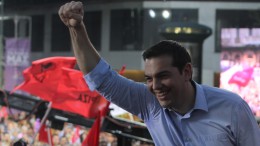
MADRID | By JP Marín Arrese | The landslide victory snatched by leftwing Syriza plus the sizeable score recorded by parties opposed to the austerity measures represents a challenge to Europe’s orthodoxy in addressing real adjustment. Greek voters have voiced their rebuke to policies encompassing significant sacrifices but failing to redress a dismal economic record. Scrapping key elements of the welfare state and imposing harsh conditions on citizens has resulted in widespread poverty. In addition, the sentiment the troika was running the country has infuriated many of those going to the polls on Sunday. For all the popular support received, Tsipras faces a  formidable challenge ahead in delivering his election promises.


No Picture

Draghi’s D-Day

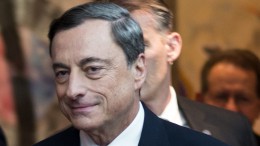
MADRID | By JP Marín ArreseThe ECB unleashed a monetary onslaught yesterday aimed at breaking the stubborn deflationary pressures and sluggish growth have shown up to now. The massive artillery barrage mercilessly pounded enemy lines  with tons of fresh money, leaving defenders no other option than  unconditional surrender. With all ammunition and reserves engaged in this breathtaking D-Day, the ECB would find itself helpless should its gamble fail. As previous landings ended in disaster, the issue now is whether this assault will work as planned. 


MAS greece

What next Greece?

By Gabriel Sterne via MacroPolisIt is easier to write down big questions on Greece’s future; harder to answer them: (1)   Will Syriza win with an overall majority?; (2)   Will a new programme be agreed in time?; (3)   To what extent will it stay on track?; (4)   How much additional debt relief and financing will the Troika give to Greece, and in what circumstances?; (5)   If and when the wheels come off the programme, is an exit inevitable? Would it be managed or chaotic? One thing we can be sure about though. The scene is set for a political showdown, the likes of which the Euro-crisis has not yet seen.


Draghi 2015 ironicTC

QE European style: €60bn monthly bond-buying until Sept 2016

MADRID | By Ana Fuentes | Amid huge market expectation, ECB’s president Mario Draghi unveiled THE operation aiming to spur growth in the eurozone: the European QE will consist of €1.1tn sovereign bonds purchases, or €60bn a month until September 2016, beginning in March. A crucial move in exchange for low risk sharing (only 20% of bonds purchased by ECB, 80% by national central banks; and Greek bonds are expected to remain out). The euro touched an intraday low of  1.1451 dollars.


QE wordcloud

“NCB risk bearing should be traded-off against a big QE”

MADRID | By Ana Fuentes | Hours before ECB’s president Mario Draghi unveils its big easing program, we spoke to think tank Bruegel central banks’ expert Silvia Merler about an eventual national risk bearing. It could be a way to make QE more acceptable by Germany, she believes, although “it should be traded-off against a significant size” (meaning more than the €50bn purchases per month some market watchers are talking about).


eurozone inflation

ECB’s time for truth

MADRID | By Ana Fuentes | It’s been the talk of the town for months, driving up demand for government bonds in the eurozone, pushing yields to record lows and heating the debate among market makers. And yet nobody knows the scope of the European Central Bank’s next move. The much-awaited quantitative easing (QE) program is expected to be officially announced after 14.30CET today and include controversial sovereign bond purchases of €50-70billion euros per month until the end of 2016. Is the ECB late? Will the ECB manage to spur growth in the eurozone with that amount? 


lithuania

Lithuania’s central bank governor: “There’s no reason to doubt euro area future”

STRASBOURG | By Alexandre MatoAfter adopting the single currency on 1 January 2015, the transition period of dual circulation has finished for Lithuania, the country thus becoming the 19th euro area member. Vitas Vasiliauskas, the Governor of The Bank of Lithuania, spoke to The Corner in an exclusive interview before the ECB’s crucial meeting on 22 January, when QE could be launched.


grecia tsipras1TC

Why is Europe worrying about SYRIZA?

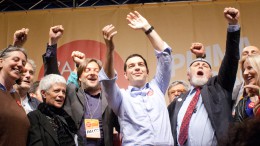
PARIS | By Francesco Saraceno via MacroPolis | It is most likely that from the elections of January 25 will emerge a SYRIZA-led government, the main uncertainty being how large a coalition Alexis Tsipras will have to gather to obtain a comfortable parliamentary majority. This is seen with a fair deal of preoccupation in Europe. A preoccupation that does not seem warranted. SYRIZA is no longer the radical party of the beginning, which called for the exit from the euro and for a default on Greek public debt.