
In Europe


greece privatisation

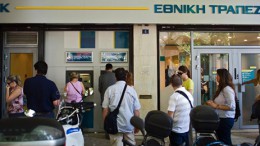
The arduous road of privatisation in Greece

ATHENS | By Jens Bastian via MacroPolisWhy is the process of privatization in Greece fraught with political controversies, a lack of public support in large parts of Greek society and subject to ever-increasing administrative delays and judicial objections? 


epa spain

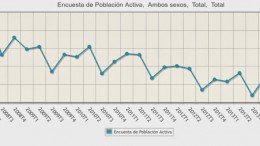
More (yet less paid) employment in Spain

MADRID | By Luis Arroyo | Last jobless data in Spain were excellent in terms of unemployment rate reduction, the government pointed out on Thursday. But are they 100% reliable? Total worked hours have fallen and they continue to fall. That is, more Spaniards are working, yet more and worse paid hours. In the graph above: total working hours per week. 


energía renovables recurso TC

European Investment Bank will not fund national energy sector updates

BRUSSELS | By Alexandre Mato | The EU hopes to set up a new policy framework targeting the reduction of greenhouse gas emissions by improving renewable energy by 2030. The continent´s energy efficiency would be improved with utilities companies and operators operating under the auspices of the directive. It could be a crucial step, designed to save €100bn annually for consumers –most of them households.


stress tests

The 1,697 ‘less significant entities’ of the German banking sector

BERLIN | By Alberto Lozano| This November, the European Central Bank will assume its new banking supervisory responsibilities. Firstly, on 26th October the ECB will publish results of comprehensive assessments that will determine the financial health of 120 banks in the Eurozone. These tests cover approximately 85% of total bank assets. But what about the remaining 3,532 small banks of the euro area?


greek banks

Greek banks may soon breathe sigh of relief on capital needs

ATHENS | By Manos Giakoumis via MacroPolis | Greek banks are always at the forefront of domestic market developments. Despite the strong rebound of 6.4 percent on Friday, their shares still recorded cumulative losses of 7.8 percent last week and 23.9 percent over the past three months. Concerns about the outcome of the upcoming comprehensive assessment European Central Bank are one of the key factors weighing on investors’ minds. 


No Picture

Europe: Calling a spade a spade

SAO PAULO | By Marcus Nunes via Historinhas | Tim Worstall comes out and calls a “spade a spade” in “Europe Doesn’t Have A Debt Crisis, Europe Has A Monetary Crisis”: The stock markets plunge over concerns about the eurozone; there’s a flight from lower quality sovereign bonds; Greek, Spanish and other periphery bond yields spike. It looks like the eurozone debt crisis is back. But this time around we really should get to grips with the fact that what we’ve got here is really not a debt crisis.


EU energy import dependency

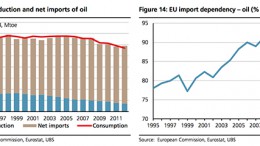
Europe’s energy drama: import dependency is high –and rising

MADRID | The Corner | Winter’s coming and Europe finds itself in a complicated position. The (declining) production of the continent’s energy import has traditionally fallen short of (growing) consumption . In 2012, 53.7% ofEurope’s energy consumption was based on imports – up from in 44% in 1996, according to UBS. Brussels admits the share of imported energy is likely to rise to 100% in oil and above 80% in gas by 2030.