
In Europe

germany's flag

Germany: the sick market of Europe?

BERLIN | Alberto Lozano | Some figures were already announcing during the last weeks that Germany was losing momentum. Its equity market also was the 3rd worst performer since the European market peaked on June 10th, so the GDP fall of 0.2% in the largest economy of the Euro area is not a surprise. A negative effect from the balance of exports and imports and a fall in construction are the main causes for this slight GDP decrease. However, both households and government consumed slightly more than in the previous quarter. Therefore, growth in consumption and imports might be a positive signal for the Europe’s largest economy in the coming quarters of 2014.


No Picture

German investors lose their confidence in Europe’s growth engine

MADRID | By J. J. Fdez-Figares (LINK) | After the rises experienced by the European and American stocks on Monday, these markets showed yesterday certain weakness, leading to a mixed closing in the major indices in Europe and negative in US. Thus, and since the beginning of the day in Europe some profit taking by the short-term investors were observed, who profited from the rebound that many values experienced on the day before. As there was a lack of relevant developments in the three main geopolitical conflicts (Ukraine, Iraq and Gaza), the investors’ attention turned to macroeconomic data, particularly towards indices released yesterday by the German institute ZEW.


ForeignTradeStart06

Germany’s domestic demand might be taking the helm

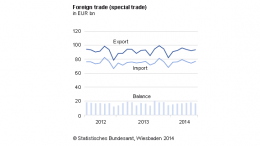
BERLIN | By Alberto Lozano | At the end of the week, good news are coming from Germany’s trade data. After calendar and seasonal adjustment, German imports rose by 4.5% on the month, rebounding from a sharp fall in May (-3.4%) with the highest month-on-month increase since November 2010. In addition, German exports increased by 0.9%, narrowing the criticised surplus to 16.2 billion euros from 18.8 billion the previous month.


NewOrdersStart061

Russian sanctions start to impact on Europe’s export powerhouse

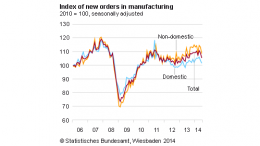
BERLIN | By Alberto Lozano | While yesterday downs on Wall Street were marked by rising tensions in Ukraine, negative data from German manufacturing orders also seem to to be influenced by the geopolitical risks and the Russian sanctions’ impact on the eurozone’s economic recovery.


20140804 CARLOSCOSTA

Portugal rescues BES with €4.9bn coming from Troika’s bail-out

BERLIN | Alberto Lozano | The Portuguese government splits BES into two banks. On the one hand, it will inject €4.9 billion of capital in a new company called “Novo Banco”, which will get all the assets and employees from the crisis-hit bank. On the other hand, all toxic assets mostly related to its exposure to the Espirito Santo family will stay in the current Espirito Santo’s “bad bank”.


No Picture

BCE: Widespread decline in interest rates of banking corporate credit

MADRID | The Corner | The ECB reported on Thursday the data of interest rates applied in banking corporate loans in June, which have been reduced by 18 bp in loans worth up to €1M for the EZ (up to 3.57%). Moreover, these discounts have been widespread and even higher in peripheral economies’ banks: -21 bp up to 4.3% (weighting by GDP of rates applied in Spain, Italy, Ireland and Portugal).


MANUFACTURINGPMI

EZ manufacturing sector expands in July, but France continues deteriorating

BERLIN | By Alberto Lozano | Despite of the growing concerns following the escalation of the crisis in Ukraine towards the end of the month, the EZ manufacturing PMI index remains expanding in July (51.8), according to Markit data published today. Netherlands (53.5), Germany (52.4) and Austria (50.9) saw an acceleration of the growth, while Greece (48.7) continues depressed and France (47.8) keeps being the “Europe’s sick man” and the main brake to the European growth. With the worst figure in Europe, the French manufacturing sector even contracted in July at the fastest rate since December. Meanwhile Ireland (55.4), followed by Spain (53.9), registered again the sharpest rate of growth, supporting the eurozone manufacturing recovery.