Spanish economy

Forty years of Spanish Constitution, forty years of institutional stability

Forty Years Of Spanish Constitution, Forty Years Of Institutional Stability

William Chislett | By the time General Franco died in 1975 Spain had undergone profound economic and social change, which laid the foundations for an even greater transformation over the next 40 years, but it was a long haul. The new constitution, drawn up by all the main political parties and approved in a referendum on 6 December 1978 by 88% of voters on a turnout of 67%, sealed the transition to democracy.


salaries spainTC

Forty Years Of Democratic Spain: No Resemblance To What It Was

On next December 6, the Spanish Constitution and therefore Spain’s democracy turns 40 years old after another 40 years of dictatorship. Until that day, The Corner is going to publish a series of articles written by William Chislett, associate analyst at the Elcano Royal Institute about, precisely, how much and and how deep the country has changed in these last 4 decades. Today’s story is just the beginning.


Bad outlook for Spanish banks: they will have to pay the legal costs for mortgages

Spanish Banks Pending On Court Ruling About Legal Costs For Mortgages

Spain’s banking sector lost € 5.560 Bn in market capitalisation yesterday after the country’s Supreme Court decided they woud have to pay mortgages taxes and not the final client. Just 24 hours after, the Court announced they will review the decision. Morgan Stanley calculates that the effect of ruling could reach 12 billion euros.


guaranteeing Spanish pensions means reforming the system itself

Forget Tax Collection, Guaranteeing Spanish Pensions Means Reforming The System Itself

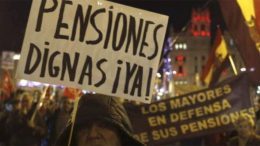
The Spanish Ministry of Finance rules out a new specific tax hypothecated to finance pensions. In fact, the majority of developed countries has reformed their pensions systems basing them on various pillars (public/private; obligatory/voluntary) especially the nordic countries. Only Italy, Portugal, Greece and Spain maintain a pensions system based solely on obligatory social security contributions.


Lagarde Spain

The IMF Seeks A Realistic Fiscal Adjustment Of 0.5% From Spain In 2019

In relation to the fiscal deficit, the IMF has suggested to the Government of Pedro Sánchez that it calculates “realistically”the incomes it expects to collect from tax increases, to avoid a sharp increase in the deficit. The organisation has also lowered its forecast for GDP growth in Spain in 2018 from 2.8% to 2.7%. For 2019 the IMF expects GDP to grow by 2.2%, in line with its previous forecast.