FED

draghi yellen

Draghi steals the limelight in Jackson Hole

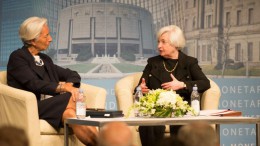
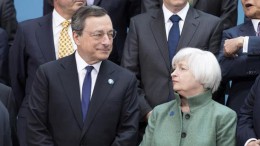
MADRID | By  J.P. Marín Arrese | Draghi’s performance in Jackson Hole has largely overshadowed other central bankers. Undoubtedly he surpasses himself in summertime. Just remember his landmark defence of the Euro back in August, 2012.


No Picture

Jackson Hole: Without inflationary pressures on the horizon

MADRID | The Corner | Central bankers are meeting this week in Jackson Hole to talk about employment and its weakness in general terms. Unlike what is happening in Europe, US and UK are seeing improvement in employment (their unemployment rates have decreased from 10% to 6.2% and from 8.4% to 6.4%, respectively) with the curiosity that they’re not coming with wage increases. In fact, last British data shows the first fall since 2009. This circumstance means less inflationary pressures, therefore Bankinter analysts think that central banks will not start to tense its monetary policy until wages begin to invigorate, something that will take some months to arrive.


No Picture

UBS: Data support acceleration in US real GDP growth

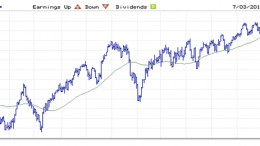
MADRID | The Corner | From the macroeconomic side, US data are showing a clear improvement in the economy, with the labor market growing at similar rates to those seen prior to the financial crisis and consumer confidence surging in July to the highest level since October 2007. The business results also show a positive trend with growth in earnings by 12.0% (ex-financials) and +10.0% inc. financials.


No Picture

UBS: Fed realizes a reverse repo program isn’t the answer

MADRID | The Corner | The continuous U.S. labor market upturn (on average 213K jobs/month were created so far this year) paves the way for the consumption and investment growth. The economy strength and the employment trend enabled the Fed to continue to reduce the QE program even after the weak beginning of the year. But apparently the Fed itself is still far from consensus.


dollars4 afp 670 580x350

Experts divided on US rate rise

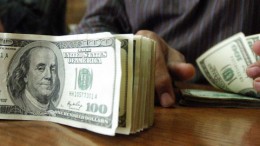
MADRID | By Francisco López | Investors are closely looking economists’ forecasts about the next rate hike in the United States. Until recently, the vast majority opted for movements in the second part of 2015. Now, after the last job creation data, some analysts believe that the rise could come as early as 1Q15.


dow jones record

Strong US jobs report stirs debate on Fed’s earlier move

MADRID | The Corner |“Yabadabadu!,” US economist Justin Wolfers exclaimed on his Twitter account.  The strong jobs report (unemployment rate declined to near a six-year low of 6.1% and non-farm payrolls rose by 288,000 last month)was released on Thursday gave a shot of optimism over the strength of the job market’s recovery. The Dow broke 17,000 for the first time. Will all this have any influence on the Fed’s tapering plans?


No Picture

Bankinter expects 3Q vertigo in sound cycle

MADRID | Bankinter Analysis | 3Q Perspectives. Economic cycle speeds up and, mostly, gains soundness and reliability. Global growth will consolidate in 2014/2015 by +3%/+4% with positive news for developed countries and less favorable surprises in emerging markets. Japan and India are the exception to this rule. Spain will also amaze and main economic risk will lie in regional regional integrity issues whose aftermath may be undervalued, regardless the final scenario.


Wall Street

Fed tapering: Doubts resurface again

MADRID | JP Marín Arrese | The revised growth figure for the US economy in Q1 comes as a nasty surprise. It has dampened market sentiment worldwide. Earlier assessments blaming bad weather the moderate setback no longer hold when faced with a downturn close to 3%. Even discarding a fallback into full-fledged recession, it undoubtedly points to a markedly weaker performance than expected. The Fed tapering strategy is confronted with a baffling dilemma.


No Picture

Halting QE= Active monetary asphyxiation?

NEW YORK | By Benjamin Cole at Historinhas |  The recent historical and empirical record strongly suggests central bank quantitative easing (QE) works. The riddle is whether both the Japan and U.S. economies will slip into stagnation again without QE, as long as there is a global glut of capital holding down interest rates, and inflation is dead—or even if inflation is near 2 percent on the PCE deflator, the putative Fed target. The riddle might even be reframed: When central banks do not conduct QE, are they actively engaged in monetary asphyxiation?