
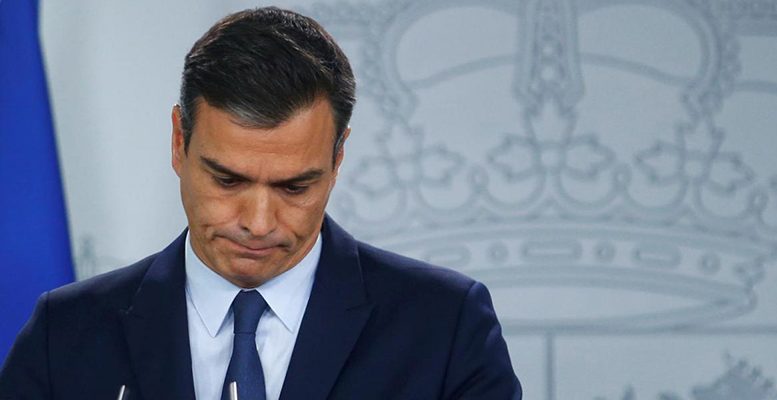
Aurelio Medel (5Días) | The Prime Minister lacks the support to tackle serious problems (such as housing), and the far right is the primary beneficiary of this inaction.
Every week, the Government proposes new regulations, marketing them as solutions to real problems of varying urgency and complexity, but they ultimately come to nothing. This past week, it was the regional financing reform (rejected even by regions governed by the PSOE) and the tax break for landlords who do not raise rent for their tenants. These announcements dominate public debate and lead to melancholy, as the Executive lacks the legislative majority required to make them effective measures.
This “fireworks” policy has been routine since November 6, when Junts announced it would block 24 of the Government’s legislative initiatives and withdraw its support for the remainder of the term. Furthermore, desertion among the parties that supported the investiture is on the rise, occasionally drawing in Podemos, Compromís, the BNG, or Chunta Aragonesista. Moreover, lately, even Sumar—the government coalition partner—has joined the chorus of critics.
The primary beneficiaries are extremist forces. In recent months, all polls have consistently pointed to Vox as the main recipient of citizen disenchantment with politics. This week’s 40dB poll indicated a 5.5-point growth in voting intention for the party led by Santiago Abascal since the last elections, reaching 17.9% of voters. Meanwhile, the PSOE has dropped 4.6 points to 27.1%, and the PP has lost 1.6%, remaining at 31.5%. Furthermore, data from this survey suggest that the far-right force is already “fishing” in the PSOE’s waters: 4.8% of those who voted for Pedro Sánchez’s lists now say they would vote for Vox.
This outlook definitively challenges the narrative constructed by the Prime Minister himself, who is determined to complete the legislative term despite the fact that the opposition bloc now holds the majority. Sánchez’s arguments are essentially twofold: that he can and wants to continue governing with a minority in Congress, and that his Government serves as a bulwark against the far-right. The reality of the data refutes these assertions more decisively every day.
If Sánchez took his own reasoning seriously, he would call for elections, just as he did in 2023 following the disaster of the regional and municipal elections. Politics gains its true meaning when it solves common problems, integrates minorities, and guarantees rights. It is the exercise of power through influence, which has nothing to do with governance by occupation (Pedro Sánchez) or by coercion (Donald Trump)—both of which can be considered forms of abuse of power. As the Socialdemocracia 21 manifesto by Jordi Sevilla concludes, we must “reclaim useful politics.”


