
Report by Renta 4
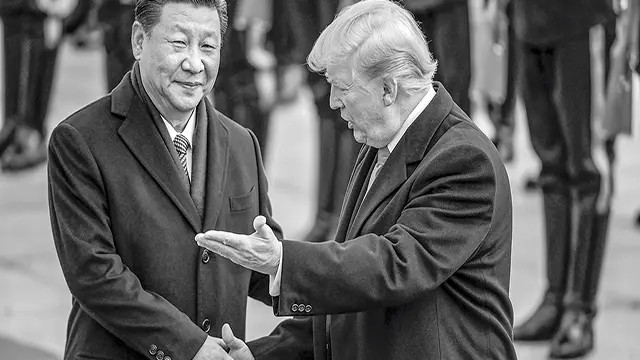
European markets open higher (Eurostoxx futures up 0.6%, S&P futures up 0.4%, Nasdaq futures up 0.4%), with Brent futures up 0.5% and all eyes on the long-awaited Trump-Xi Jinping meeting in Beijing, which begins today and will run until tomorrow.
Regarding this meeting (postponed from its originally scheduled date at the end of March due to the outbreak of war in Iran), the focus of interest will be on whether there are any concrete positive agreements (joint statement on Hormuz or a Chinese commitment to put pressure on Iran, renewal of the trade truce and détente on semiconductors and rare earths) or, conversely, whether the differences between the two world’s major powers intensify. We believe there will be several key issues to address: 1) developments in the Middle East conflict, particularly the “energy shock” resulting from the closure of the Strait of Hormuz, bearing in mind that China is the world’s largest importer of crude oil; 2) tariffs, where we note that a truce has been in place since August 2025, when the US cut the tariff on fentanyl from 20% to 10% and China suspended its export controls on minerals and rare earths for one year (until Nov-2026), 3) Taiwan, a constant source of tension and Beijing’s first red line, and 4) AI and the semiconductor war, given the US’s tightening of restrictions on exports of advanced chips to China, which in turn may respond with restrictions on exports of critical minerals; a technological and critical raw materials interdependence that “forces” the world’s two major powers to find common ground.
Yesterday, two significant reports were published in the oil market, highlighting the delicate supply situation. In its report, the IEA warned of a critical scenario, with global oil reserves depleting at a “record pace”, with sharp falls in March and April, foreshadowing a rise in prices before the summer. Furthermore, although the IEA estimates a contraction in global crude oil demand of 420,000 barrels in 2026 to 104 million barrels per day (1.3 million barrels per day below the pre-war estimate) as a result of global economic weakness, it warns that supply will fail to meet demand, with the deficit persisting at least until Q4 2026. This forecast reflects a market that will remain undersupplied at least until the end of Q3 2026, even in the optimistic scenario that the conflict ends in June. This situation represents an unprecedented supply shock and will require an additional million barrels per day of supply over the next three years to rebuild the reserves that are being depleted. For its part, OPEC estimates global oil demand at 106.3 million barrels per day for 2026 (up 1.2 million barrels per day from 2025) and growth of 1.5 million barrels per day for 2027, with supply set to grow by 600,000 barrels per day in 2026 (unchanged from April).
It is also worth noting that yesterday Kevin Warsh was confirmed as the new Fed chair following a Senate vote, which was somewhat close at 54 votes in favour versus 45 against, revealing a clear division. A term for Kevin Warsh that looks set to be difficult, with a divided Fed in a complicated context of rising inflation (the conflict in the Middle East) and pressure from Trump to cut rates. The market is currently no longer pricing in any rate cuts, but rather a 25bp hike in 1H27 (70% probability), expectations that are in line with yesterday’s comments from the President of the Federal Reserve Bank of Boston, Susan Collins (non-voting), warning that the Fed could raise rates if inflationary pressures do not ease.
We also had remarks from ECB’s Lane warning of increased inflation risks, with the impact of the current energy shock likely to be more contained than in 2022, as it is unfolding in an environment with weaker demand support. Lane highlighted that the rise in oil prices caused by supply disruptions tends to reduce GDP growth in the Eurozone by between 0.2 and 0.3 percentage points in the following years. Lane emphasised that the ECB’s response will remain data-dependent and will depend on how persistent inflation proves to be, but that temporary and moderate deviations do not require a more restrictive monetary policy.
At the macro level,the day’s key data will come from the US, with April retail sales, where a slowdown is expected, and weekly jobless claims (205,000e against 200,000 previously). Meanwhile, in the UK we will see Q1 2026 GDP, whilst in Spain the final April CPI will be published (preliminary figures show 3.2% headline and 2.8% core).
On the corporate front, the Q1 2026 earnings season is drawing to a close, and in Spain Colonial SFL, Merlin Properties, Telefónica and Técnicas Reunidas are due to report today. In the United States, Cisco rose by 19% after publishing Q3 2026 results that beat estimates and providing sales guidance for Q4 2026 of between $16.7bn and $16.9bn (5% to 7% above consensus), and announcing a restructuring plan, which includes the redundancy of less than 5% of the workforce, to refocus its investments and efforts on the Artificial Intelligence (AI) market, a rapidly growing sector.


