
Report by Renta 422 June 2026European markets opened without any major movements (Eurostoxx 50 futures -0.2%, S&P 500 -0.3%, Nasdaq 100 -0.3%) against the backdrop of US -Iran negotiations are making progress despite a rather chaotic start (the Iranian delegation initially refused to take part in the joint photo with the US, whilst Trump threatened to attack Iran again if Hezbollah did not cease fighting and warned that the US might start charging tolls if no agreement was reached). Despite these tensions, the Strait remains open, and Brent is down 2% this morning at 79 USD/b, although events such as the explosion at the restart of Qatar’s gas industrial complex (Ras Laffan) and statements from insurers (“security in the Strait is an hour-by-hour game”, a sign that war risk premiums remain high) highlight the complications involved in the reopening and normalisation of energy supplies.
Among the points agreed in the negotiations that began yesterday between the US and Iran, we highlight: 1) a roadmap towards a final agreement within 60 days, 2) a direct line of communication to prevent incidents and miscalculations, and 3) a “deconfliction cell” involving the parties and Lebanon to ensure a ceasefire in the area. Araghchi (Iran’s Minister of Foreign Affairs) confirms that the US has lifted the exemptions on Iranian oil and petrochemical exports, as well as lifting the blockade and unfreezing some assets, whilst the reconstruction plan is reported to have been launched.
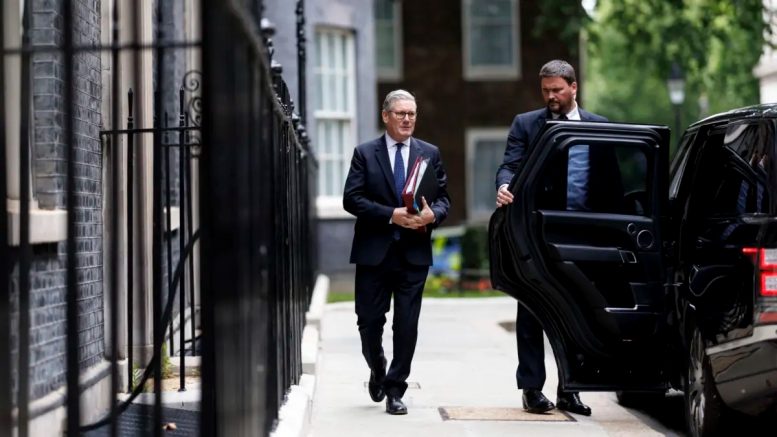
One of the key focuses in the markets today will be on the UK, where Prime Minister Starmer could resign, according to The Guardian and other sources. Last week, Defence Secretary Healey resigned, and polls show that with Burnham (Mayor of Greater Manchester, who has just won a parliamentary seat, opening the door for him to contest the Labour Party leadership and become Prime Minister), Labour has regained between 1 and 3 points on the Reform Party, although it does not yet have a clear lead. The pound is trading close to its 2026 lows at $1.3181, but the real focus will be on gilts (government bonds), which could come under pressure (with yields rising) if Burnham relaxes fiscal rules.
Looking ahead to this week, investors’ attention will be focused on the release of leading macroeconomic indicators of economic activity. In particular, the preliminary June PMI indices (Tuesday) for the Eurozone, the UK, Japan and the US will be released, allowing an assessment of the impact of the previous energy shock on the manufacturing and services sectors. Furthermore, in Germany, the June IFO business expectations survey will be published (Wednesday), whilst in Spain the final first-quarter GDP figure will be released. However, the most significant macroeconomic data point of the week will be the US core personal consumption expenditure (PCE) deflator for May (Thursday) – the Fed’s preferred inflation indicator (for the time being) – for which a year-on-year rate of 3.4% is forecast (against 3.3% previously). On the corporate front, we will see the quarterly results from FedEx (Tuesday) and Micron Technology (Wednesday).
As for central banks, today in China, the prime lending rate remained unchanged for both the 1-year (3%) and 5-year (3.5%) tenors.
It is worth noting that, beyond the progress of peace negotiations over the next two months, the market could focus on the statements and actions of central banks, with expectations of a tight monetary policy in the short term given the damage already inflicted on inflation by the conflict in Iran. The market is pricing in two rate rises of 25 bp by the Fed, the ECB and the Bank of England through to Q1 2027. The Fed’s leadership under Kevin Warsh’s chairmanship points towards a period of reduced transparency and a more aggressive stance against inflation. With the price of Brent crude at around 80 USD/b, inflationary pressures will ease in the medium term, but global stock markets will need to justify their valuations by relying on recurring growth in corporate profits rather than on the expansion of multiples in an environment of more restrictive interest rates. We believe the market will continue to be volatile throughout these two months of negotiations, given that share markets are trading at record highs (in many cases driven solely by a handful of companies, reflecting excessive concentration), and with the upcoming earnings season just around the corner (mid-July).


