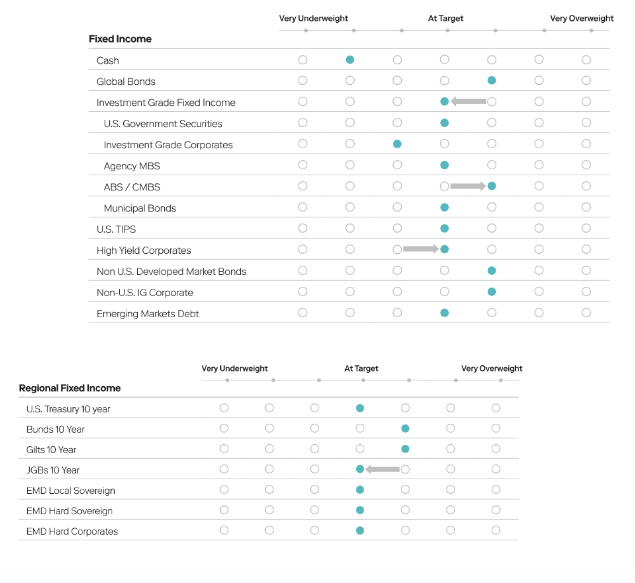

The firm believes that, despite the impact of the rise in real interest rates on fixed-income markets in the coming quarter, the credit market may continue to show resilience as long as growth remains robust and inflation stays under control.
Report by Neuberger
Movements in interest rates this year have been driven primarily by the rise in real interest rates rather than by an increase in inflation expectations. Real interest rates stand at around 2.25 per cent, well above the levels seen in the period following the global financial crisis (GFC), although still below the thresholds that have historically led to significant stress on risk assets.
Historically, real interest rates of between 3% and 4% have represented a risk zone for the markets. Levels close to 3% begin to put pressure on financial assets, whilst 4% is usually associated with much more severe episodes of stress.
The main implication is that credit may continue to perform solidly even in an environment of higher yields, provided that economic growth remains robust and inflation expectations stay under control. Credit spreads remain tight across investment-grade, high-yield and emerging-market debt segments, but we do not believe that tight spreads, on their own, justify a reduction in exposure. Corporate fundamentals remain sound, demand for assets offering carry remains high, and there are few signs of a widespread deterioration in credit quality.
Duration in the US remains the most complex decision within the fixed-income markets. The Federal Reserve faces a particularly challenging environment, characterised by strong demand for capital, resilient economic growth, uneven strength in consumption, investment momentum linked to artificial intelligence, and inflationary pressures that may not yet be fully resolved.
Furthermore, the Fed’s new leadership may choose to buy time through working groups, communication more focused on balance sheet management and less explicit forward guidance, rather than acting swiftly on interest rates. As a result, we maintain a neutral stance on US government bonds.
By contrast, Europe offers a clearer opportunity in terms of duration. More moderate economic growth, a more limited mandate for the central bank and growing evidence that the ECB may have completed its cycle of rate rises support a favourable view on developed market debt outside the US, particularly European fixed income.
Key positioning changes compared with the second quarter of 2026
US investment-grade corporate debt is reduced to a neutral (at target) position. This revision reflects the risks associated with rising real interest rates, sensitivity to duration and credit spreads that remain at very tight levels.
High-yield corporate debt has moved from ‘underweight’ to ‘in line with target’. The carry remains attractive, fundamentals are not generally deteriorating, and the market continues to favour higher-quality high-yield bonds. We do not recommend investing in CCC-rated bonds or in distressed issuers.
Asset-backed securities and commercial mortgage-backed securities have been upgraded from ‘in line with target’ to ‘overweight’, owing to their attractiveness relative to corporate credit, both in terms of risk-adjusted returns and carry.
The overweight position in Japanese government bonds (10-year) has been reduced, reflecting rising domestic inflation (excluding subsidies), the weakness of the yen, high energy prices and the Bank of Japan’s gradual monetary tightening path.