
Articles by The Corner

About the Author

The Corner
The Corner has a team of on-the-ground reporters in capital cities ranging from New York to Beijing. Their stories are edited by the teams at the Spanish magazine Consejeros (for members of companies’ boards of directors) and at the stock market news site Consenso Del Mercado (market consensus). They have worked in economics and communication for over 25 years.
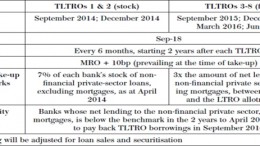
tLTROs main features1

ECB’s Praet: TLTRO will break the lack of credit’s vicious circle

MADRID | The Corner | Upcoming TLTRO in Sept 18 and Dec 11 will allow EZ banks to borrow an amount equivalent to 7% of what they currently lend to the private sector at 0.25% a year (excluding interbank loans and mortgages), breaking the vicious circle of high lending rates to companies, high credit risk and a sluggish economic performance, European Central Bank’s chief economist Peter Praet said on Wednesday. 


No Picture

Has global inflation reached an inflection point?

LONDON | By The Corner | Cross-economy inflation readings have surprised to the top side, according to Barclays experts. This has occurred despite analyst forecasts for a pick-up in the pace of price increases. These surprises have been – like the downside surprises of the past couple years – remarkably broad based. They also began before the start of the recent rise in oil prices.


No Picture

BIS, money and the “prolonged depression”

SAO PAULO | By Marcus Nunes via HistorinhasThe depression may not be “Great”, but it has certainly been “Prolonged”. And like many things, good or bad, that persist, people “get used” to it! And there are those, like the BIS, who think that deepening the depression is worth it if it means reducing the risk of another financial crisis! The world´s major central banks have certainly caused a lot of damage by tightening money in the face of imaginary inflation dangers, but at least they are shrugging off the BIS “recommendations”.


No Picture

Germany’s monthly decline is the biggest in two years

MADRID | The Corner | European and US markets fell on Monday while waiting for the Wall Street’s quarterly results season to begin. The session began without a clear trend, but the European markets went downwards when Germany published disappointing industrial production data in May. This monthly decline is the biggest in two years and might be the result of the 1st May long weekend and the geopolitical tensions deriving from the crisis in Ukraine.


No Picture

Spain: internal devaluation progresses and employment improves

LONDON | By The Corner | The Spanish Tax Agency published on Monday its monthly statistics on large enterprises. Experts at Barclays explain that among others, the May data show that wages dropped 0.3% y/y (sa and wda) for these firms. The average monthly wage increase in Jan-May period was -0.2% y/y, which coincides with the average monthly salary growth increase since the main 2012 labour market reform in Spain.


No Picture

Stimulus desync

MADRID | The Corner | While the US Federal Reserve may wind back its asset purchases by a further $US10 billion at the end of July, the ECB is ready to launch the first two TLTROs on 18 September and 11 December 2014, with settlement six days later. 


bull bear

Don’t dismiss a pronounced correction of markets

MADRID | By The Corner | Corporate earnings season (2Q14) is about to start in Wall Street, with Alcoa opening the way and with the major American market indexes –Dow Jones and S&P 500- at maximum levels. The macroeconomic perspectives of the country will also help, especially after having overcome the impact of the weather on the GDP, as well as the certainty that the Western central banks are committed to support the economic recovery. Thus, investors expect that the official interest rates will keep at very low levels in relative historical terms for a long period of time.


digital

Media: New offers and suppliers change business from scratch

The Corner via Deutsche Bank Research | For a long time, technological progress in the world of media has surpassed the improved image display via screen diagonal or contrast by far. This is not only shown by the gadgets which the TV viewer may use for his or her personal analysis of the games of the FIFA Football World Cup. This opens completely new opportunities and business models for the large field of visual media.