In Europe

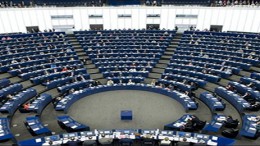
PARLAMENO EUROPEO

EU nearer to become a one-voice block

MADRID | By Julia Pastor | For the first time European citizens will elect the successor of the European Commision’s president Jose Manuel Durão Barroso. The upcoming elections of May 25 will have two candidates, one for the socialist party, Martin Schulz, and another for the conservatives, Jean-Claude Juncker. This change of direction is not the result of a reform or a pact in the back room but of a consensus decision. Hopefully, the US could no longer say they don’t have a European direct interlocutor.


No Picture

The withered EU recovery

BRUSSELS | By Jacobo de Regoyos | The euro zone’s GDP is to grow by 1.2% in 2014 and by 1.7% in 2015, the European Commission forecasts, while the whole of the EU will do by 1.6% and 2%, respectively. Even if Brussels rather thinks recovery is firmly rooted and it must protect it from gloomy predictions, the truth is that last data are showing an economy that is not really taking-off. 


Barclays

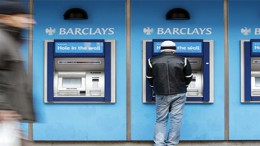
Why Barclays is saying adiós

MADRID | By Julia Pastor | Barclays will create a ‘bad bank’ for non strategic assets such as the Spanish retail banking business, which it intends to get rid of. The British entity arrived to Spain only 40 years ago and became the country’s fifth bank as well as the biggest foreign one. It was severily battered by the crisis, but the difficulties to take profit of its Spain’s investments- they purchased the medium size Banco Zaragozano at €1.1 bn in 2003- and also to win market share from the solid national banking industry’s position are other factors to be considered.


germany in greece

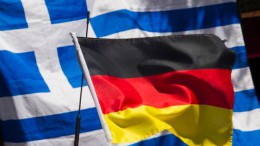
€ 21,717,120,000

ATHENS | By  Yiannis Mouzakis via Macropolis | This is the total amount of money that has left German coffers since the Greek crisis started in 2010. It corresponds to Germany’s portion of the European Stability Mechanism’s (ESM) paid in capital, which was announced on May 1 as the fund reached its full capital amount following the transfer of five installments since the end of 2012. Germany’s participation in the euro crisis mechanisms, aside from the ESM paid in capital, has been in the form of guarantees. It all started with the bilateral loans to Greece which every country apart from Germany provided directly. Berlin only gave state guarantees to its AAA-rated development bank KfW. The German taxpayer did not have to bear any cost for this transaction.


No Picture

Brussels demands more austerity to Spain to meet deficit target, praises banks’ reform

MADRID | By The Corner | In its first surveillance report after the Spanish banking sector bailout, the EC believes that entities are stronger and cleaner. Even if NPLs ratio has not stabilized, banks “are shifting towards more stable funding, such as deposits, and are relying less on borrowing from the Eurosystem.” As market access conditions have greatly improved, Brussels Spain’s return to positive economic growth (using February data, when growth estimates for 2014 were 1% instead of 1.1%) and was positive about the labour market slight improvement, although it warned that jobless rate remains very high (26% 2Q13). Brussels considers that unless further austerity measures are adopted the crisis-battered country won’t meet its deficit goals.


Draghi preocupado

OECD backs pressure on Draghi

MADRID | By Julia Pastor | As the euro touched 1.40 against the U.S. dollar on Tuesday and low inflation looms over markets, all eyes are on tomorrow’s ECB meeting. The central bank has so far remained inactive, trying to save time by taking advantage of inflation-indexed bonds. After recent IMF’s warnings to Draghi about the need of a decisive move, the OECD has also severily urged the institution to cut interest rates to zero until 2015 as well as situate the deposit rate slightly in negative.


No Picture

ECB is likely to stay put but it is a very close call

LONDON | By Barclays analysts | We expect the ECB to stay on hold at next week’s Governing Council meeting, though we think the likelihood of further easing remains very elevated. Should the ECB decide to act, we remain of the view that cutting rates would be the preferred option. Furthermore, we believe its implementation is not straightforward, making it unlikely in the short term


Europa del sur

Can Spain become EU’s periphery locomotive?

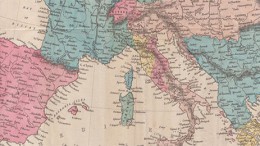
MADRID | By Julia Pastor | Spanish PM Mariano Rajoy started campaigning for the upcoming European elections on Tuesday. In a radio interview he announced that the country’s unemployment rate has started reversing since job destruction is slowering. The fall of the country’s risk premium and 10-year bonds yields are crucial for companies financing abroad, he recalled. Even though Brussels forecasts are just estimates, they do support the idea that Spain could become the driver of peripheral EU with a growth over Italy, Portugal and even France.