Spanish economy

No Picture

What an unfortunately insufficient difference an ECB word makes

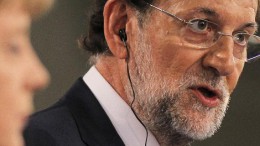
LONDON/MADRID | President Mariano Rajoy should manage to take this week a breath, although it will probably feel too weak. A simple look at the curve of Spain’s government debt now shows a steep upward gap between the internal rate of return of two-year bonds and the cost of the medium and long-term credit for the country. Indeed, 24-month debt paper’s IRR has tightened by more than 450 basic points…


No Picture

Debt difficults Spanish banks mergers and auctions

José Luis Marco, CAPITAL MADRID | Spanish government’ two first RDL condemned more than one financial institution to the red throughout this exercise. The sentence has not been limited to the four entities under the FROB umbrella but has also reached some entities that are in the process of integration with other groups, such as CEISS Bank, Caja Duero Spain, in full merger with Unicaja, to take losses of 125…


No Picture

There will not be Spanish debt buying unless profitability goes up (JP Morgan)

By Tania Suárez, Madrid | It seems that September will be a busy month, the beginning of a year full of interesting appointments for investors. As noted from JPMorgan, markets have already priced in aggressive Spanish debt buying by the European Central Bank, “but the risks shall remain high.” Many sources agree that the ECB is not expected to provide many details of the SMP. “There’s not a clear indication…


No Picture

Barcelona challenges Madrid

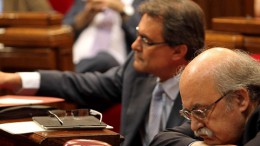
The Catalonian regional government has filed a request for help warning Madrid it will not accept any condition linked to such rescue. For a Cabinet in desperate need of cash to keep running its services, the flat refusal to take on board any tip seems a bit reckless. But it has a trump card in its bid to soften Madrid resistance. It is threatening to trigger a full fledged confrontation…


images10

Morgan Stanley: Spanish bank restructuring legislation will improve competition

The draft RDL for bank restructuring and resolution is expected to be passed next Friday in Spain. Aimed at preventing new banking catastrophes, the new legislation gives the Bank of Spain and the state-backed Fund for Orderly Bank Restructuring (FROB) new powers to intervene before crises erupt. Morgan Stanley believes the new decree law will drive further consolidation in the sector, which together with extensive liability management at weaker entities,…


No Picture

A full rescue may help Spain to bit the bullet

Now that full rescue seems an unavoidable option, overtly accepted by Madrid, the main opposition party in Spain has found some way to deliver a scathing attack on government. For all its dismal delivery while in power, it managed to avoid such unpalatable scenario. The current cabinet, supposedly better equipped to bring Spain out of trouble, has already being forced into a €100 billion banking salvage package and now it…


images8

Spanish government keeps the upper hand on banks reform

The new set of rules on restructuring and liquidation of ailing banking institutions planned to be approved next Friday confers full command to the Spanish government. The Bank of Spain will exclusively identify solvency failures and pit in place an early warning mechanism to redress potential deviations. But once public money is involved the task is conferred to a formally independent body, the FROB, but under tight governmental control. Politicians…


images7

Buy more brick for a worst price

CAPITAL MADRID, José Sánchez Mendoza.–  Pay more, almost double, but with a comfortable loan that covers all or most of the amount. It’s a win-win situation, don’t you think? Though it may seem, this is not the lamp seller in a Moroccan bazaar’s talking but the candy that banks put in front of consumers to get rid of the housing stock that hampers their balance sheets. According to a study…


kjzx

“Contraction and austerity combined are an extremely dangerous mix for Spain”

Morning! Today we bring you the last part of our summer series interview with Professor of Economics at Columbia University Martin Uribe. He believes that the Eurozone needs structural changes to tackle the crisis, especially in fiscal matters. The lesson we should learn from this crisis is to avoid high capital inflows into a country as happened to Spain from 2000 to 2008. – Several Nobel laureates have decried budget…