
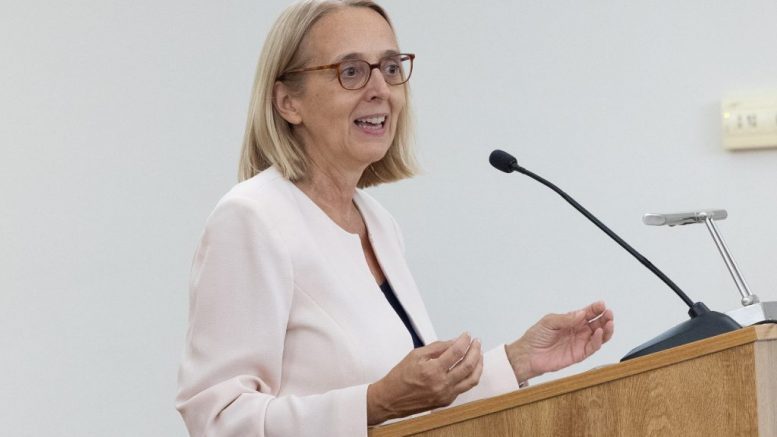
Although the Independent Authority for Fiscal Responsibility (AIReF) raised its GDP forecast by three-tenths of a percentage point—up to 2.5% for 2026—it warns that an adjustment of six-tenths of GDP is urgently needed. This translates to more than €10 billion in public spending cuts this very year. If these additional measures are not implemented, there is a serious risk of breaching the national rule, both at the Central Government level and across most autonomous communities and local corporations.
The president of AIReF, Inés Olóndriz, issued this warning during the presentation of the Report on Budget Execution, Public Debt, and the Spending Rule in 2026. She pointed out that net primary spending is projected to grow by 6.4% this year, flowing well above the reference rate of 3.5% set by the national spending rule.
Olóndriz also noted that postponing these measures will only kick the can down the road, shifting the burden of the adjustment to 2027 and 2028. In other words, if these steps are not taken immediately, the government emerging from the 2027 general elections will be forced to implement them at the eleventh hour to comply with EU demands.
High tension in Central Government
The oversight body is particularly critical of the Central Government, where it identifies the highest level of fiscal strain. Computable spending is projected to rise by 8.8% compared to last year—exceeding the national reference rate of 3.5% by more than five percentage points.
Furthermore, this administration has still not fulfilled its legal obligation to present an Economic-Financial Plan (PEF), despite already failing to comply with the spending rule back in 2025.


