
By Julia Pastor
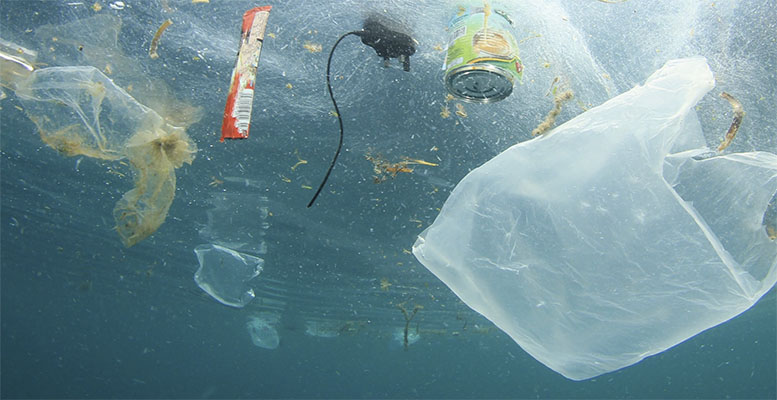
With the arrival of summer come the familiar scenes of beaches packed with parasols and children building sandcastles. Sailing boats gliding across the luminous blue of the seas and the more subdued hues of the oceans. The mirror of the planet’s marine waters, however, reflects back a far less evocative image: an entire ecosystem, from the coastline to the high seas, polluted by more than 150 million tonnes of plastic, acidification caused by carbon dioxide and the heat it absorbs, and indiscriminate fishing practices.
The ocean regulates the climate. It captures 30 per cent of man-made CO₂ and distributes heat via ocean currents. It produces more than 50 per cent of the Earth’s oxygen thanks to phytoplankton. Its biodiversity—the greatest on the planet—sustains natural, economic and social systems on which millions of people depend. Food, medicinal resources, raw materials such as salt, sand, minerals, water… and sailing – the good life. The price we pay for these benefits is, for example, the creation of the Great Pacific Garbage Patch, a dumping ground of 1.8 million microplastics situated between California and Hawaii. Or the record high of 20.86°C reached globally by the sea surface on 21 June, which could wipe out entire marine species.
The perception that they are inexhaustible due to their vastness has pushed the oceans to the back of the environmental agenda. Until now. There are many initiatives, launched by both public and private institutions, aimed at restoring to marine ecosystems, through regeneration, the value we have taken from them. The most important is the UN Global Ocean Treaty, which took 10 years to finalise and came into force at the start of the year. Its aim is to protect 30 per cent of international waters by 2030, as currently less than 1 per cent is covered. Its implementation will also enable the creation of ‘sanctuaries’ or protected areas on the high seas to prevent the degradation of biodiversity and guarantee food security for humanity.
Europe is also beginning to expand its ocean agenda with programmes such as OceanEye and the European Ocean Pact, which focus on marine observation, ecosystem restoration, the sustainable blue economy and coastal resilience. Finally, the work of organisations such as Underwater Gardens International, which has been carrying out marine restoration projects for years, is particularly noteworthy.


