Search Results for deflation

Credit expansion

To control credit expansion is tricky

MADRID | By Luis Arroyo | In his beautiful and easy-reading blog Fixing the Economists, Philip Pilkington recently posted about the difficulties of the monetary policy to stabilize the economy. The most interesting aspect is perhaps that his comments are based on old and forgotten economists who wrote very well and had clear ideas. In this case, he chooses Kaldor and Harrod, two smart Keynesians.


No Picture

Time for ‘Draghilogists’

FRANKFURT | By Lidia Conde | Experts don’t agree about what can happen in the short and medium term in the Eurozone. The main critical voice is the president of Munich’s Ifo Institut, Hans-Werner Sinn, who believes that Europe is in a “resting phase” before the storm hits again. According to Germany, now is the time of the “Draghilogists”, i.e. those analysts who try to elucidate the ECB’s next step.


No Picture

The withered EU recovery

BRUSSELS | By Jacobo de Regoyos | The euro zone’s GDP is to grow by 1.2% in 2014 and by 1.7% in 2015, the European Commission forecasts, while the whole of the EU will do by 1.6% and 2%, respectively. Even if Brussels rather thinks recovery is firmly rooted and it must protect it from gloomy predictions, the truth is that last data are showing an economy that is not really taking-off. 


No Picture

The pernicious effects of an overvalued euro

MADRID | By Francisco López | While Mr. Draghi simply says that the ECB “is closely following the evolution of the exchange rate due to its impact on the price stability,” other international bodies such as the IMF, the OECD, the European Commission and most of the Eurozone’s countries (with the exception of Germany and its allies) demand the banking authority to take immediate action.


Draghi preocupado

OECD backs pressure on Draghi

MADRID | By Julia Pastor | As the euro touched 1.40 against the U.S. dollar on Tuesday and low inflation looms over markets, all eyes are on tomorrow’s ECB meeting. The central bank has so far remained inactive, trying to save time by taking advantage of inflation-indexed bonds. After recent IMF’s warnings to Draghi about the need of a decisive move, the OECD has also severily urged the institution to cut interest rates to zero until 2015 as well as situate the deposit rate slightly in negative.


No Picture

Credit lending: 2 ends of the financial string

MADRID | By Luis Arroyo | Which came first, the chicken or the egg? Does the credit decrease because the demand is weak or because banks don’t offer any? Requirements imposed by banks to lend money (excluding to the public administrations) are aggressive both in real and collateral interest rates. Meanwhile, the possibility that the ECB increased rates would further collapse bank credit.


No Picture

Bankinter results cause mixed feelings; Moody’s points to a sexier Spain

MADRID | By Jaime Santisteban | Bankinter, the Spanish bank with highest credit rating announced results under expectations, according to Santander. Analysts look optimistic on Spanish equities profitability and expect a 15% growth in Ibex 35. Spain walks on a firm and positive trend, points out Moody’s.


debt

The juicy business of speculating with Spanish sovereign debt

MADRID | By Julia Pastor | Speculators who dared to buy Spanish debt in 2012 when it yielded 7.5% and priced a record low of 88.6% made a good deal with gains of 38%, now that Spain’s 10-years bonds’ interests near 3% and price stands at 122.6%. Moody’s thinks the country’s sovereign debt is going upwards, alongside Ireland, thanks to its economic, institutional and fiscal strengh. However, Italy’s rating is suffering from the opposite trend.


BoE

BoE raises expectations (and ECB misses them)

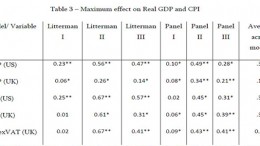
MADRID | By Ana Fuentes | As ECB officials spend their time debating what form of QE the euro zone needs to fight deflation risk (note that although its inflation target is 2%, the central bank keeps on sitting on its hands while its balance sheet is shrinking), more data point to the positive effects of unconventional measures on growth. Check this one recently published by the Bank of England: the mere announcement of a QE shot corresponding to 1% of GDP caused a 0.36% real GDP increase and a 0.38% CPI rise in the U.S. ­–a little less in the U.K. Indeed, hope can move mountains… and money.


Real economy

The Long Goodbye

BEIJING | By Andy Xie via Caixin | What’s important in today’s financial world is perception, not substance. If you check out what important financial figures have proposed in the past, they have been good for forming bubbles, not for growing the real economy.People around the world will only begin to question their economic policymakers when they realize living standards are slowly worsening.