China

china happy

Lockdowns Around Shanghai Are Especially Painful For Cars, Electronics And Chip-makers

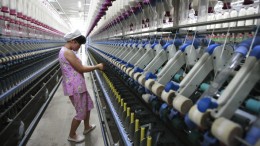
Alicia García Herrero (Natixis) | When the Chinese economy sneezes, the global supply chain catches a cold. After the successful containment at the initial stage, China has decided to maintain its dynamic zero-covid strategy against a more contagious albeit milder variant of the virus, namely Omicron. The approach has initiated the lockdown in Shanghai. Given its economic size, trading role, and the contagion risk of lockdowns in the surrounding provinces,…

car makers europe

The Playbook For Chinese Carmakers To Mitigate Waning Domestic Demand And Higher Costs

Alicia García Herrero (Natixis) | After three years of sluggish performance, China’s car sales finally reverted to positive growth in 2021. The auto industry is essential for the Chinese economy as it forms 28% of retail sales and 7% of industrial revenue. Without a recovery in car sales, it is hard to imagine a solid rebound in consumption. In this note, we analyze the demand for passenger cars in China…


China Services PMI

What Does China’s 2021 Energy Crunch Mean For Its 2022 Macroeconomic Outlook?

Alicia García Herrero (Natixis) | Even with more than two years after the first outbreak of COVID-19, China, as well as the rest of the world, still faces the impact of the pandemic. While the economy has surged from the bottom since the middle of 2021 after China’s successful containment of the domestic spread of the virus, the recovery’s momentum has slowed down quite rapidly, especially since the second quarter…


china blues 1

Can China Bail Out Putin?

Alicia García Herrero (Natixis) | The unprecedented sanctions imposed on Russia in the wake of its invasion of Ukraine are likely to have devastating consequences. But this will depend on whether Russia manages to bypass the sanctions or, at the very least, mitigate them. One important consideration to answer this question is China’s potential role in offering a helping hand to the Russian economy. China’s economic size and financial clout,…


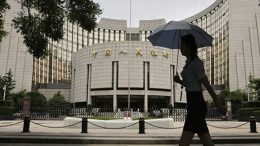
china central bank

China Continued To Deleverage Towards The End Of 2021 Thanks To The Corporate Sector But With An Increase In Government Debt

Alicia García Herrero (Natixis) | China’s debt-to-GDP ratio continued to decrease in Q4 2021 to 264.3% from 266.5% in Q3. Notwithstanding the deleverage path in 2021, the debt is still much higher than the pre-pandemic one (247.5% in Q4 2019). Chinese corporates contributed the most to the deleveraging process, as their debt to GDP ratio further dropped to 155.1% in Q4 2021 from 158.3% in Q3 2021. Because of the…


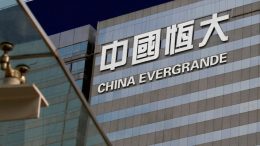
An exterior view of China Evergrande Centre in Hong Kong

China’s Regulatory Crackdown: What To Expect?

Alicia García Herrero (Natixis) | Chinese policy makers have been engaged in a massive regulatory crackdown for over a year. A number of sectors have been affected, starting with the tech sector, followed by the education sector. At the same time the real estate sector has also been severely affected by a specific regulatory crackdown (the three red lines) and a more general antitrust push has also taken place. In…


real estate investment trusts in China

China’s Real Estate Sector: Size Does Matter

Luís Pinheiro de Matos (CaixaBank Research) | China’s real estate sector is often described as «the most important sector in the world» because of the importance it has amassed in recent decades in the Asian giant’s growth model. We analyse how significant a role it plays in the Chinese economy and the risks of the Evergrande effect.


china central bank

Q4 GDP Enough To Set China’s 2021 Growth Above The 8% Benchmark But With Challenges Ahead For 2022

Alicia García Herrero (Natixis) | Chinese economy has rebounded by 8.1% in 2021 after slumping to 2.2% in 2020. While the Q4 year-on-year growth rate was lowered to only 4%, the current growth momentum was still positive as the QoQ growth rate (seasonally adjusted) have accelerated to 1.6% in Q4 from 0.7% in Q3. However, there are signs that the Chinese economy is facing increasing challenges, raising questions on whether…


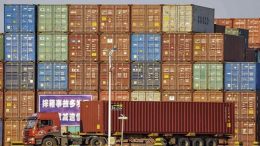
aranceles china

The ‘China Shock’ Of Trade In The 2000s Reverberates In US Politics And Economics

Amitrajeet A. Batabyal ( The Conversation) In December 1978, the Chinese leader Deng Xiaoping introduced economic reforms that dramatically altered China’s economy by strengthening trade and cultural ties with the West. Beginning in the 1990s, these reforms set China on a trajectory to become what it is today: a nation with a dynamic and substantially market-driven economy that is also the world’s second-largest. U.S. residents have enjoyed lower-priced goods exported…


Yeor of the Ox

China’s Long-Term Problems Are Forcing It To Rethink The Whole Economy

Kent Matthews ( The Conversation) | Growth in China was in fact declining well before the pandemic struck: from a peak of 15% in the second quarter of 2007 to 6% in the first three months of 2019. The nation’s growth strategy rests on four pillars. Three are frequently talked about – infrastructure, exports and consumers – while the fourth is only whispered in official circles – and that is the property sector.