Chinese SOEs Can Brag They Are Big – but Not Strong
BEIJING | By Xia Huihan, via Caixin magazine | Chinese state-owned companies or SOEs should stop gaining muscle for the sake of the country’s economic health.

BEIJING | By Xia Huihan, via Caixin magazine | Chinese state-owned companies or SOEs should stop gaining muscle for the sake of the country’s economic health.
Iris Mir | By mid-June the National Audit Office of China released a report unexpectedly detailing the debts of 36 local governments. It unveiled the chilling figure of 3.3 trillion dollar in debt, by the end of 2012. A 13% higher than in 2010. Furthermore, the lack of stimulus investment plans is fuelling scepticism among those who expected the Asian dragon to keep the world economy afloat. Mostly because the priority for China now is to reorient its model of growth with ambitious programs like the new Co2 emissions exchange.
Keep in mind a new concept: Lionomics. An acronym that gives name to the ambitious process of economic reform the new Chinese Prime Minister Li Keqiang must bring forward.

BEIJING | By Qu Yunxu at Caixin | The European Commission is imposing a provisional anti-dumping tariff on Chinese solar panels until August. Beijing has launched an anti-dumping and anti-subsidy investigation over European wine in China. What’s behind this war?

After a Chinese teenager defaced a stone sculpture in an ancient Egyptian Temple, an intense debate has sparked about travelers misbehavior and national shame. Chinese tourists increasingly are the main target for the world’s biggest hotels and tour companies. And they are big spenders: $102 billion on overseas trips last year, a 40 percent jump over 2011 spending. However, as some experts tell Ray Kwong, many consider a trip abroad more like a Spring Break to wildly indulge than a museum visit.
Angela Merkel refuses to levy tariffs of 47% on Chinese solar panel imports because she fears damaging China-Germany relations and being shut out of its market. However, in Ray Kwong’s view, Berlin is too dependent on China’s economic engine, which could crack anytime due to territorial conflicts, too-rapid expansion of credit, lax environmental oversight, widening discontent among the population and many other legitimate problems.
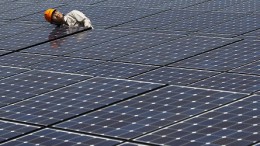
A new dispute among EU members has arisen. This time is not an austerian versus keynesian brawl but a shall-we-punish-Chinese-dumping one. Next week the Commission will decide whether to impose big tariffs to the $27 billion worth of solar panels that China sells to Europe each year. In this battle over how to respond to Beijing trade practices, will domestic interests prevail?
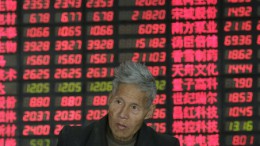
By Ray Kwong | Broad strokes, when you’re talking about the 21st century possibly becoming the Asian Century, one thing becomes crystal clear: it’s not preordained and it’s not just all about China. With its varied cultures and emphasis on education, self-reliance and upward mobility, Asia may overtake the West as the world’s economic engine.
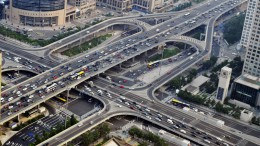
China turns into a urban nation. A transformation that entails a dramatic achievement and a challenge without precedents in the world. As cities become better places to live they become more expensive too, to the extent that people can’t afford the luxury of inhabiting these mega-cities. Without a fairer model, which fosters job creation and an equal access to resources, urbanization risks undermining the country’s transition towards domestic consumption.
BEIJING | By Caixin Magazine | Global opinion on China economic prospects appears to have soured of late. Credit ratings agency Fitch downgraded the country’s long-term local-currency rating from AA– to A+ last month, followed by Moody’s lowering the country’s credit outlook from “positive” to “stable.” Are market bears right? For many, this means Beijing must put reform back on its agenda.