
Is Mario Draghi bothered?
MADRID | By Luis Arroyo | Monetary policies are a by-product of politics, after all, and in Europe, politics are tightly controlled from Berlin, which will probably use the Fed’s reaction as example of what the ECB must do.

MADRID | By Luis Arroyo | Monetary policies are a by-product of politics, after all, and in Europe, politics are tightly controlled from Berlin, which will probably use the Fed’s reaction as example of what the ECB must do.

MADRID | By Luis Arroyo | The BIS is one of the institutions that has publicly put more pressure on the US Federal Reserve to change the course of its monetary policy–with disparaging results.
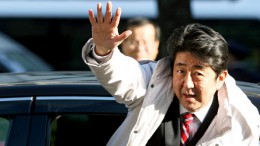
MADRID | By Miguel Ángel Rodríguez, analyst at XTB | valenciaplaza.com | Has the Japanese experiment failed? Under the stress of some political pressures, Japan may have rushed into an expansion of its monetary base without all the due protections.

MADRID | By Luis Martí | What is worrying is the Bundesbank attitude of permanent and frank opposition to the initiatives of the ECB to overcome the crisis, being against any flexibility and realism that the economy is needing.

MADRID | By JP Marín Arrese | The ECB has made crystal clear it has no intention to undertake any extra effort in helping the economy to overcome its current recession. Its message utterly fails to provide confidence.

MADRID | By Julia Pastor | Small and medium size companies are the most vulnerable side of the European economy, but also the most powerful weapon to get out of the crisis. Germany will develop a €10 billion credit plan to move peripheral countries SMEs for their own export engine works.

With the great amount of debate, chatter, and serious analysis about the EU’s financial rescue of Cyprus from insolvency and potential departure from the eurozone, many wonder if the EU policy emerging from the Cypriot “bail out” will have a lasting impact on the political and economic integration of the Europe. In John Sydney Hopkins view, the EU rescue of Cyprus will be seen as a milestone event with a lasting impact on the EU’s ability to manage the process of integration.
LONDON | Why would eurozone banks still have up to €120 billion deposited with the ECB, instead of using them to prop up businesses and consumption? At zero percent interest rate?
MADRID | By David Fernández | Foreign investors are showing a sudden interest in assets made in Spain due to, among others, central bank’s last data, Europe’s decision to delay the deficit commitment by two years and international factors such as second-round monetary helicopter launched by the Bank of Japan. Will this trend vanish?
MADRID | The eurozone is trapped in internal conflicts that prevent the European Central Bank to compensate, as it should, the fluctuations of money demand.