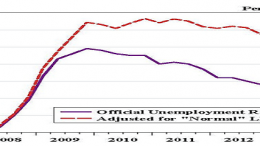
John Taylor: In Monetary Policy the Problem Is Cyclical, Not Structural
SAO PAULO | By Marcus Nunes | John Taylor talks vaguely about “policy”. To MMs, it´s very much about inadequate monetary policy.

SAO PAULO | By Marcus Nunes | John Taylor talks vaguely about “policy”. To MMs, it´s very much about inadequate monetary policy.
SAO PAULO | By Marcus Nunes | Larry Summer made a splash with his closing speech at the IMF Conference. That was probably his intention following him being denied the Fed Chair. Several people have taken turns both critiquing and asserting his “secular stagnation” thesis.
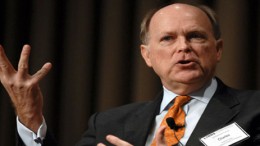
By Benjamin Cole at Marcus Nunes’ Historinhas | Recently Federal Reserve Bank President Charles Plosser opined that even periods of mild deflation could be welcome in the United States, and that Fed should have but a lone goal, and ideally that is zero inflation.

MADRID | By Julia Pastor | The Fed and the ECB launched their unconventional monetary policies starting from different positions as their economies’ financial structures are not the same. Also their forward guidance diverged, but both central banks tried to boost the real economy and were effective. The uncertainties about the future would revisit those similarities and contrasts.

Markets have started the week in a relatively directionless fashion amid slow-moving progress in Washington, Barclays analysts point out. That lack of decision could make the Fed delay the tapering until 2014, keeping downward pressure on the USD.
SAO PAULO | By Marcus Nunes | We know that over the next 10 years things only got worse and only got better when Volcker decided that to “live with inflation” was not a good deal. And things really improved when the Fed managed to keep the economy tracking a stable nominal trend level path.
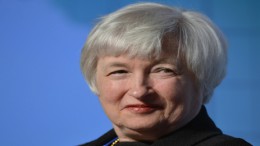
NEW YORK | By Ana Fuentes | If the Senate agrees and everything goes by the script, President Obama will pick Janet Yellen as the Federal Reserve’s next leader on Wednesday, the White House said. Ms. Yellen, 67, has been the Fed’s vice chairwoman since 2010 and would be the first woman to run the central bank. Among her first tasks is how quickly to wind down the U.S. expansionary monetary policy. Will she take even more aggressive measures to boost growth? If so, how will markets react?
LONDON | By Michael Gavin at Barclays | Today, we mainly remember the ‘Greenspan conundrum’ as a puzzle about the level of US interest rates in the several years leading up to the 2007-08 financial crisis. But the original conundrum was as much about the insensitivity of long-term interest rates to the tightening of monetary that began in mid-2004 as it was about the level of interest rates.
By Johannes Müller (Deutsche Asset & Wealth Management) | Fed’s tapering will be the beginning of a normalization of financial markets. The U.S. central bank is beginning to lift the foot off the accelerator, but it is unlikely that Bernanke and company will imminently step on the brake.
SAO PAULO | By Marcus Nunes | In a recent post John Taylor leans on Bob Hall to criticize NGDP Targeting. He goes: “In his paper at the recent Jackson Hole conference, Bob Hall criticized nominal GDP targeting, citing his 1994 paper with Greg Mankiw. Bob argues that “A policy of stabilizing nominal GDP growth would require contractionary policies to lower inflation when productivity growth is unusually high. Such a policy might easily trigger a spell at the zero lower bound.”