Spanish 2018 Budget: Subject To A Raft Of Doubts
The 2018 budgets predict very optimistic increases in revenues (+6% in some taxes). But there is no real risk of non-compliance if spending remains tightly controlled.

The 2018 budgets predict very optimistic increases in revenues (+6% in some taxes). But there is no real risk of non-compliance if spending remains tightly controlled.

The IMF highlights that the Spanish population, like that of the other developed economies, will age over the coming years. The number of pensioners is increasing faster than the number of active workers. So the average salary is beginning to come in at the same level or below that of the average pension.

Spanish pensioners are on the brink of war. The group which has been the support for families during the 10 years of crisis, and has saved the country from social conflict, received a letter from the Labour Minister, Fátima Bañez, at the beginning of the year. Despite the fact CPI is now over 1.5%, she said she was maintaining the 0.25% increase in the pensions.

It seems obvious that the most sensible thing to do with respect to retirement is to try to save something and invest it well to complement the meager pension which, foreseeably, the State will give us when we retire.

For the past eight years, Spain’s Social Security has been in the red: while revenue has increased by just 1.8% vs 2009, retirement pension spending is 54% higher than in 2009. Given this, “it is vital to define a new intergenerational social pact”, says CaixaBank’s experts.

Spain’s 2017 budget leaves little room for manoeuvre. It represents exactly 39%, the percentage the state can freely make decisions on what do with from what it raises and borrows. It shows that, despite the fact the economy is doing well, we have a lot of problems.

Carlos Bravo | To be able to maintain current Spanish pensions model in 2050, when the large majority of the baby-boom generation will reach retirement age, we will need to raise pension spending to around 15% of GDP. This is a significant challenge, but one which is perfectly doable. The challenges of the system are two-fold: guarantee its financial sustainability and ensure there are sufficient funds available.
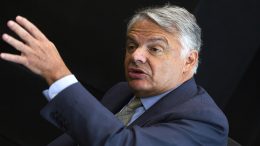
Companies have to make an effort to generate quality jobs so the recovery in confidence and consumption ends up being consolidated, says Mutua Madrileña chairman Ignacio Garralda.

The Social Security numbers over the last few years are really alarming. Although we still have not had any official confirmation, experts estimate that at end-21016 the system had a hole of nearly 18 billion euros, 40% more than in 2015, and almost six times over budget.
There is a lot of talk at the moment about Spanish pensions. But, it would appear, not enough. At least it is by no means clear that public opinion and voters are very aware of what is about to land on top of them: that in 2017 the pension piggy bank will be empty. And what will happen then?