
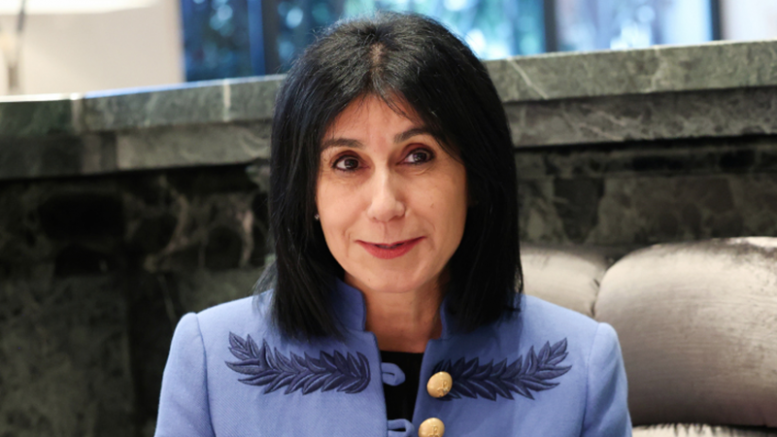
Elena Guede, board member at Tubacex and Celsa, explains in Consejeros magazine that: “At this moment, there are two distinct models. In Europe, we have a model that regulates everything related to climate ambition. It starts with greenhouse gas emission reduction targets, extends them throughout the value chain, sets objectives, defines highly rigorous and demanding reporting, and establishes border carbon footprint mechanisms, etc. This forces the European industrial environment to face all these regulations and requirements while simultaneously competing in a global market. On the other side is the United States, where, with the arrival of the Trump Administration, there is a shift in strategy regarding sustainability and the competitiveness of American industry. They are refocusing on autonomy through fossil fuels, significantly simplifying regulations, and resuming protectionist aspirations. If you add current geopolitics to this—wars, energy volatility, the entry of products from China and the U.S. with powerful technological innovation—all of this becomes the ideal breeding ground for European industry to feel vulnerable, as it cannot compete on a level playing field in a global environment.”
A Spanish stainless steel manufacturer publicly commented that absenteeism at his Spanish plant was over 8%, while at his American plant it did not even reach 3%. Can you explain if you are experiencing something similar and why you think this is happening?
Absenteeism in the Basque Country is also very high, over 8%, and it is not sustainable. Absenteeism is growing due to various factors: an aging workforce, shifts in mindset, generational changes, and even changes within the healthcare system itself. Specific collective bargaining agreements include many social benefits that also end up increasing absenteeism; furthermore, union management includes hours that are counted as absenteeism. This is not the case in other countries. In the United States and elsewhere, if you are on leave, you likely do not get paid, or your salary is significantly lower. In Spain, in many companies, the worker is supported with 100% of their salary, which I think is very good because it is part of a social pact, but it implies a much higher cost for the company that eventually impacts the final consumer.
Manufacturers complain that the EU is not reacting and that China is clearly dumping. Do you agree?
Right now, we are in a slightly more optimistic situation. China has been an overproducer of steel for years—specifically commodity steel, the most basic carbon steel—although today they also compete in more specialized steels. With the implementation of tariffs in the U.S., they have more capacity to continue flooding Europe. In Europe, there is free entry for steel up to a certain limit, followed by tariffs. However, this depends on a regulation that expires in 2026. National and European associations have worked very firmly, and I believe quite successfully, to make the European Union understand that we must be more demanding regarding steel imports from other countries. Otherwise, we will delocalize European steel; we will close factories in Europe, which would be a tragedy because it would mean losing competitiveness and manufacturing capacity.
The EU has understood this, and a proposal is about to be voted on in the European Parliament that makes regulation much more demanding. It reduces the volume of steel allowed to enter duty-free by almost half—down to 18.3 million tons—and applies a 50% tariff to the rest. Then there is another very interesting measure: the Carbon Border Adjustment Mechanism (CBAM). In Europe, we greenhouse gas emitters must pay for the CO2 we emit. This costs money, making steel production in Europe more expensive than elsewhere. By 2035, the free allocation of emission rights will be permanently eliminated; since 2026, it is already being significantly reduced. The goal is to implement a payment so that countries wishing to trade their steel in Europe must pay for the difference in CO2 emitted during production compared to what an efficient European company would have emitted. The decarbonization effort must be accompanied by mechanisms that allow us to transfer that impact to the sale of value-added products; the value of having decarbonized production is not, and cannot be, free.
You are a member of the sustainability committee on the board of Tubacex, where half of the order book corresponds to oil and gas extraction units… It doesn’t seem that their complete replacement is anywhere near in the short term, yet there is an insistence on setting dates for climate targets. What is your opinion? Are they achievable?
The dilemma arises because there are currently two distinct models. In Europe, we have a model that regulates everything related to climate ambition. It begins with greenhouse gas emission reduction targets, extends them through the value chain, sets objectives, defines very rigorous and demanding reporting, establishes border mechanisms for the carbon footprint, etc. This forces the European industrial sector to face all these regulations and demands while simultaneously competing in a global market.
The dilemma arises because, at this moment, there are two distinct models. In Europe, we have a model that regulates everything related to climate ambition. It begins with greenhouse gas emission reduction targets, extends them throughout the value chain, sets specific goals, defines rigorous and demanding reporting standards, and implements border adjustment mechanisms for the carbon footprint. This forces the European industrial sector to face all these regulations and requirements while simultaneously competing in a global market.
On the other hand, there is the United States, where the arrival of the Trump Administration has brought a shift in strategy regarding sustainability and the competitiveness of American industry. They are refocusing on autonomy through fossil fuels, significantly simplifying regulations, and revisiting protectionist aspirations. If you add to this the current geopolitics—wars, energy volatility, and the influx of products from China and the U.S. backed by powerful technological innovation—the outlook is complicated.
All of this creates an ideal breeding ground for European industry to feel vulnerable, as it is unable to compete on a level playing field globally. The European Union is also aware of what is happening. The Draghi Report highlighted the obstacles facing the industry: a fragmented market, a lack of private investment capital at times, heavy regulation, and low productivity.
That is when the question arises of how we can maintain our climate goals while remaining competitive, and that is the balance we must strike. There are a series of clear barriers that make it difficult to reach these demanding targets, such as a 55% reduction in greenhouse gas emissions by 2030 compared to 1990 levels, reaching a 90% reduction by 2040, and achieving climate neutrality by 2050. These are science-based goals—both possible and necessary.
There were expectations for COP30 in Brazil, ten years after the Paris Agreement, to accelerate decarbonization and curb fossil fuel production; however, no agreement was reached, except for an increase in funding to support decarbonization in developing countries. Aside from that, it has been somewhat disappointing.


