
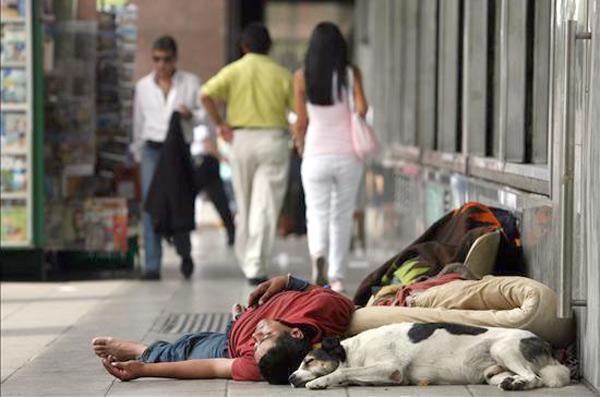
This is according to the 16th Poverty Report 2026, prepared by the European Network Against Poverty and Social Exclusion in the Spanish State (EAPN-ES). The report highlights how high housing prices are dragging down economic improvement, noting that it would take seven years of sustained economic growth to reach the same average poverty levels as the EU.
Spain leads economic growth in Europe, driven in part by the arrival of half a million immigrants each year. However, this GDP growth is not translating into an increase in per capita income. As a result, one in four residents remains at risk of poverty—a percentage that has not dropped in the last 15 years, representing 12.6 million people. Furthermore, the poverty rate (those earning less than €12,200 per year) stands at 19.5%, which amounts to nearly 10 million people. Additionally, 8% of the population lives in severe poverty, totaling about 3.9 million people. This severe poverty figure decreased by 0.4 percentage points compared to 2024, reaching its lowest level since 2009.
Highest child poverty rate in Europe
The most heartbreaking aspect involves children. Spain holds the grim distinction of being the European country with the highest child poverty rate (affecting children and adolescents): 2.7 million young people (33.8%), surpassing countries like Bulgaria and Romania, which have implemented effective measures to reduce child poverty. Experts point out that these figures are particularly devastating because it is well-proven that those born into poverty are highly likely to remain poor throughout their lives, meaning poverty is inherited as it dictates a child’s life opportunities.
Structural causes
According to the report, Spain finds itself in this situation due to several structural factors:
- Deficiencies in the Welfare State: Income guarantee policies similar to those in other European countries have not been fully developed (for instance, the failure to implement a universal child-rearing benefit).
- Housing Crisis: The state continues to fall short of providing effective solutions that guarantee the right to housing for a large portion of the population.
- Labor Market Issues: The labor market still suffers from endemic problems, such as high unemployment rates and precarious conditions like involuntary part-time work and low wages.
The report concludes that all of this stems, in part, from a productive model heavily reliant on sectors with low added value and high seasonality, such as tourism and hospitality.


