
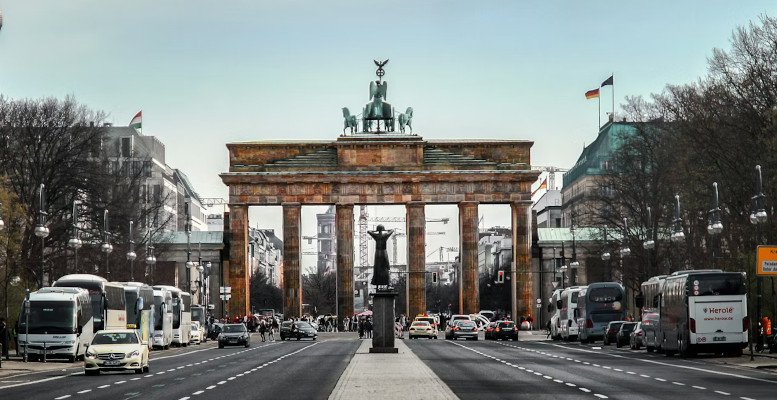
Recent growth figures, leading indicators and signals from the financial markets suggest that the German economy is performing better than the prevailing sentiment would suggest.
Analysis by DWS
Public perception suggests that the German economy remains marked by the crises of recent years. The energy crisis, the inflationary shock and the prolonged weakness of the industrial sector have weighed heavily on confidence. However, the latest data paint a more encouraging picture. The German economy grew during the first half of 2026, showing remarkable resilience in the face of both the conflict with Iran and the sharp rise in energy prices. At the same time, various leading indicators point to a further improvement in economic activity. Business surveys have improved, industrial orders are recovering and the financial markets show little sign of an economy in crisis.
1.1 A stress test with an unexpected outcome
Anyone following the public debate on the German economy could easily conclude that the country remains mired in a period of persistent weakness. Discussions continue to focus on structural weaknesses, deindustrialisation, excessive bureaucracy and a supposed loss of competitiveness. Many of these challenges are, without doubt, real. However, at the same time, they have helped to construct a narrative that is no longer fully aligned with the most recent economic data. It is also worth noting that in July the federal government presented a comprehensive reform package designed precisely to address many of these concerns.
A particularly telling example occurred during the conflict with Iran earlier this year. When oil prices soared, memories of the energy crisis quickly resurfaced in the financial markets. Concerns about a combination of lower growth and higher inflation — a classic stagflation scenario — intensified significantly. Bond markets initially reflected these fears through a rise in inflation expectations and a fall in real yields. To many investors, it seemed that the European economy, and Germany in particular, would struggle to absorb another external shock of that magnitude.
1.2 More resilient than it appears
However, the German economy demonstrated remarkable resilience. There was neither a sharp slowdown nor a lasting deterioration in the economic outlook. Germany’s gross domestic product (GDP) grew by 0.2 per cent quarter-on-quarter in the second quarter of 2026, having risen by 0.4 per cent in the first quarter. Overall, the first half of the year saw cumulative growth of 0.6 per cent, equivalent to approximately 1.2 per cent on an annualised basis.
Germany also compares favourably with its international counterparts. After adjusting for the exceptional volatility in Ireland, the eurozone grew at an annualised rate of around 1.2 per cent, in line with Germany. The US economy performed somewhat better, at 1.5%, although it has recently benefited from a strong investment cycle linked to artificial intelligence, as well as positive wealth effects stemming from rising stock markets. Against this backdrop, both Germany and the eurozone have shown remarkably solid performance.
1.3 Positive surprises are becoming increasingly frequent
Economic momentum has also shown growing signs of improvement in recent months. The Eurozone Economic Surprise Index has risen from around negative 80 points in May to positive 66 recently, placing it above the equivalent US indicator. This sharp rise suggests that economic data has repeatedly exceeded the expectations of analysts and investors.
Historically, levels such as these have often marked the start of periods in which both growth forecasts and corporate profit forecasts are revised upwards.

Overall, the data point less to an economy in crisis than to one that is gradually recovering and demonstrating a remarkable ability to withstand external shocks. Better economic data does not mean that all of Germany’s structural challenges have been resolved. It does suggest, however, that the current economic reality is considerably less negative than prevailing sentiment would suggest. This gap between perception and reality could be one of the defining features of the German economy in 2026.


