European economy

CO2

European Refining Industry Targets 30 M Tonnes Of Eco-Fuels Annually By 2035

The association FuelsEurope, representing the European refining industry, expects to produce 30 million tonnes of low-carbon liquid fuels (eco-fuels) annually by 2035. This would mean a reduction in CO2 emissions with an estimated minimum of 100 million tonnes per year by that date, and emission neutrality by 2050 in Europe. The European counterpart the Spanish Association of Oil Product Operators (AOP) has launched a plan to introduce these eco-friendly fuels into the transport sector.


Signs of a future increase in inflation

The Impact Of The COVID-19 Outbreak On European Inflation

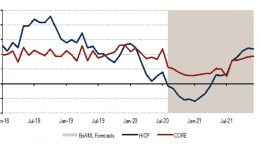
CaixaBank Research | The impact of the coronavirus on inflation is uncertain, as there are simultaneous supply and demand movements that can tilt the balance towards more inflation, disinflation, or even deflation. In the short term, despite measurement problems and the closure of markets, disinflation has dominated. In the medium term, several factors suggest that disinflationary pressures will continue to dominate. In the long term, transformations such as deglobalisation or shifts in consumption patterns could lead to structural changes.


bank antonviolin sstock

The Appeal Of Investing In Banks Is Very Strong: Expectations For Revaluation Are Close To 100% In A 1-2 Year Period

Ofelia Marín-Lozano (1962 Capital SICAV) | The starting point is much more solid than in 2008, when the banks emerged from many years of double-digit credit expansion and high rates. In addition, European banks have significantly improved their equity base, which is double, or even almost triple, the levels reached a decade ago in all their solvency ratios. The ratio of higher quality capital to risk-weighted assets, (CET1 or common equity tier 1) has risen from levels below 6% in 2011 to over 14% today. 


The ECB bets on buying private debt

Demand For Financing From The ECB Reaches Record Highs Of €1.3 Tr, With Net Injection Of Near €550 Bn

Spanish banks have requested more than €97.9 Bn in the auction. Caixabank has already announced that it has requested 40.7 billion euros, the total to which it is entitled. Other lenders have also made their moves: €27 Bn requested by Sabadell, €21 Bn by BBVA and €9.2 Bn by Bankia. In Italy, Intesa and Unicredit have already reached € 70,000 and €93,000, the latter reaching its limit. Some systems in southern Europe (such as Italy) could have reached 85% to 90% of their total TLTRO limits.


germany reinvented

Germany Reinvents Itself And Bets On Europe And High Tech

Lidia Conde (Frankfurt) |  German corporations are highlighting the risks of the global distribution of work, their weakness in the face of global value chains. Will work and production return to Europe, to Germany? It’s not clear. The pandemic has led to unprecedented reactions and almost unconditional support for Europe. It’s a way of helping yourself. Germany is expecting the worst recession since World War II, with the economy declining by up to 8% in 2020.


frankfurt sklyline

Who Is Going To Pay In A Low/Negative Yield Environment?

Allianz Global Investors | That question is heard quite often in connection with the corona-related fiscal packages. While there is no shortage of suggestions of how the new public expenditure and old debt is to be funded, many people seem to be overlooking the fact that the current low or negative interest-rate environment is already making a major contribution to debt reduction. This article will analyse the impact of implicit interest rates, growth and inflation on debt ratios in Germany, France, Spain and Italy.


The ECB thinks that the European financial system could withstand even lower rates

EU Strengthens As A Hub For Green Finance: 45.4% Of 2019 ‘Green’ Bond Issues Globally Were Denominated In Euros

In 2019, the euro consolidated its role as the second most widely used currency in the world at a considerable distance from the dollar, which retains its hegemony as the global reserve currency. The exception was in the area of green bond issues, where euro-denominated issues once again led the market. Specifically, according to data provided by the ECB, about 45.4% of ‘green’ bond issues worldwide were denominated in euros, compared to 25.7% in dollars and 28.9% in other currencies.