In Europe

Austerity

What 20 years of austerity mean

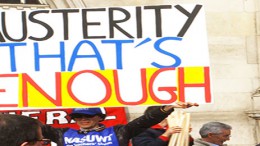
MADRID | By Luis Arroyo | Despite Italy’s PM Matteo Renzi is the only one fighting the hard EU economic line, Italian public debt reaches 135% of GDP. The country is required by the fiscal compact to return to 60% in 20 years, which would involve perpetual austerity for an entire generation at least. However, the problem does not only affect Italy but all the European Southern countries.

felipe king

BREAKING: Prince Felipe to be the next King of Spain

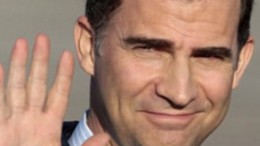
MADRID | The Corner | After almost four decades on the throne, Spain’s King Juan Carlos will be stepping down, paving the way for his son, Felipe, and opening a new chapter in the country’s history. The 76-year-old monarch is considered a key actor in the transition from Franco’s dictatorship to democracy. In the recent years he has been suffering from health problems and lost public support due to his gaffes and the corruption scandal involving his daughter and son in law.


Ana Palacio querella Luis Barcenas EDIIMA20130205 0551 4

“Ukraine sees EU as governance model”

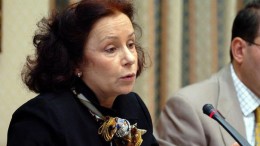
BRUSSELS | By Jacobo de Regoyos | After Mr Poroshenko’s victory in Ukraine elections, expectations have risen to end the profound civil unrest. And many citizens are “identifying the EU with governance quality,” former head of the Spanish diplomacy (2002-04) and MEP Ana Palacio pointed out. She just came back from Kieve, where she was part of an international poll observers’ mission together the former US Secretary of State Madeleine Allbright.


ecb1

Why does the ECB feel so uneasy?

MADRID | By J.P. Marín Arrese | Markets are discounting an easing in European monetary policy in the forthcoming days. Yet, the mood in the ECB is far from cheerful. It feels being dragged into action by political constraints.


pib

Spanish GDP: The crystal clear lie

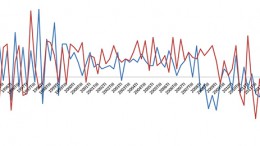
MADRID | By Luis Arroyo | Spanish 1Q GDP was released on Friday. Data were shameful and let me explain you why: in order to reduce the public deficit, the government transfered 2013 4Q public spending to 2014 1Q. So these last numbers are those they had tried to hide under the carpet. In the graph above, the blue and line represent private and public consumption, respectively.


No Picture

ECB: When monetary policy involves exploration

BERLIN | By Jean Pisani-Ferry via Caixin | The small world of central bankers, market participants, economic officials and financial journalists is feverishly debating whether the European Central Bank (ECB) is about to embark, and should embark, on an unconventional monetary policy course. For the outsider, the whole discussion may look odd: Why has the issue become important? Hasn’t the ECB already embarked on such a course?


No Picture

Bank of Spain makes Sareb blush

MADRID | By Carlos Díaz Güell | The Spanish central lender ordered the national bad bank Sareb’s to assess the 107,000 toxic real estate assets again and 215,000 collaterals on loans that it purchased to the intervened financial entities. This new due dilligence ruined the work of 24 companies such as the property firm Richard Ellis, Clifford Chance’s lawyers and the consulting group KPMG.


No Picture

Draghi highlights credit constraints and risk of disinflationary expectations taking hold

LONDON | By Barclays analysts | ECB is going to cut its policy interest rate and/or announce targeted liquidity measures, with a view to support bank lending at the 5 June Governing Council meeting. In his remarks at the ECB Forum on Central Banking being held in Portugal, ECB President Draghi highlighted the risk of a negative spiral between low inflation, falling inflation expectations and credit for the euro area.


No Picture

IMF’s dual formula for Spanish SMEs: debt haircut & lower wages

MADRID | By Julia Pastor | The key for a Spanish sustainable economic recovery are the country’s SMEs. Considering they mean about 90% of the national corporate landscape, the IMF’s last report on Spain provides two main recipes for helping them survive: extending aids for insolvent companies, which would “preserve Spain’s strong payment culture,” and also increasing wages cuts.


pettis getty d24c7d27 copia

“Spain has been trying to be a good citizen by keeping the German bankers happy”

MADRID | By Ana Fuentes | Well-known U.S. economic theorist and financial strategist Michael Pettis believes the European project has a blatant, simple economic problem: Germany benefits from a weak euro while Spain suffers from a strong currency. As for the IMF’s recommendation of cutting wages in countries like Spain, Mr Pettis thinks it’s an absurd tip that can only make the global demand imbalance worse. He answered our questions via email from Beijing, where he is currently based.