
In Europe

No Picture

Elections results present fresh challenges for SYRIZA and New Democracy

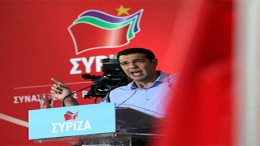
ATHENS | By Macropolis | The final results from Sunday’s European Parliament elections confirmed that SYRIZA gained a victory of 3.9 percentage points over New Democracy but the outcome of the ballot left both parties with much to think about in the weeks ahead. SYRIZA attracted 26.6 percent of the vote, which is slightly down on its share of the vote in the June 2012 elections. New Democracy received 22.7 percent but pointed to the 8 percent that PASOK’s Elia alliance gained as evidence that the coalition retains a clear mandate to continue governing.
BohOjZ8IUAIT6eB

European Elections: the dangerous rise of europhobia, disappointment and disaffection

The Corner Analysis | In the grim day in which the French National Front victory broke the expectations of a more united and strong Europe, Spaniards broke the bipartisan establishment for the first time in 35 years. Podemos, born from the Indignados (outraged) movement, was the biggest surprise in the political arena. Voters weary of austerity measures and corruption also punished the political establishment in Greece. Eurosceptics and xenophobe movements dangerously gained strenght in Denmark, Austria, Finland and the UK.


No Picture

EP2014: Abstention and skeptics posed to win

MADRID | The Corner | It’s not just another campaign carried out from and for the states or Brussels, but the first time the long-aspired EU political union will be really tested. The EP2014, world’s second biggest polls (India comes first) with +400 potential voters are taking place after the implementation for the first time of the Lisbon Treaty prerogatives. The effects of austerity measures and budget cuts are expected to have a great impact, and abstention may be the main winner, especially among the youngest, disappointed generation. Stay tuned!


No Picture

EU elections: Sexist remark ruins Spain prospects

MADRID | By J.P. Marín Arrese | The Spanish centre-right leading candidate for the European Parliament has been the center of a sexist row for the last week. And his biggest mistake might be that he only acknowledged the devastating blunder his last remark meant (he said he was worried about ‘cornering a defenseless woman’ in the debate against his socialist rival Elena Valenciano) when socialist MEPs denounced his attitude as utterly inappropriate.  His apologies come too late. Mr Arias Cañete is bound to suffer widespread criticism during the hearing process for appointing the next Commission. 


Syriza

Greek politics in thrall to new faces and old ideas

ATHENS | By Nick Malkoutzis via Macropolis| SYRIZA leader Alexis Tsipras was 32 when he burst onto the central political scene in Greece by attracting 10.5 percent of the votes in the Athens municipal election in 2006. At the time, it was unprecedented for such a young candidate, especially one representing a left-wing party, to gain this level of support. Eight years on, and with Tsipras leading SYRIZA, 33-year-old Gabriel Sakellaridis gained 20 percent for SYRIZA in the electoral contest for the Athens mayorship.If we use this as a yardstick to measure the party’s progress, one can only conclude that SYRIZA has made big strides.


europe growth

Low growth looms over Europe

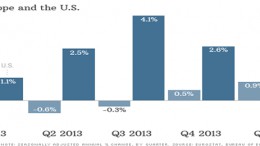
MADRID | By J.P. Marín Arrese | Europe faces the daunting challenge of sailing to the safe shore, with little growth in sight. Southern economies, save Spain, are struggling to scramble out of recession. Others such as France seem stuck in a perilous no man’s land. Only Germany seems endowed with enough stamina for securing a healthy path, even if its performance looks rather lacklustre when matched with the one the US is witnessing.


No Picture

Preparing for the ECB’s June action(s)

LONDON | By Barclays analysts | The latest disappointing inflation and growth data have reinforced market expectations of ECB action(s) in June. The significant rally of short rates seems consistent with expectations of a policy rates cut, as well as a chance of additional liquidity injections. At this stage, we see limited room for a further rally and suggest paying tactically 1y Eonia.


p28 European elections

EU elections: The iron rule of economic growth and popular support

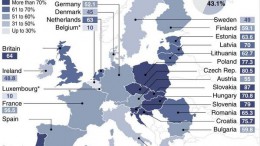
WASHINGTON | By Pablo Pardo | In 2007, 70 percent of Spanish citizens had a favorable opinion on the EU. After seven years of recession, banking collapses and sovereign debt crisis, support is now at just 50%, two points below the United Kingdom’s. This is not the only area where Euro-skepticism has taken hold in the Spanish public opinion. Only 38 percent of Spaniards believe now that “the [European] economic integration has strengthened the economy.” In Britain, the proportion is 41 percent.


Europe's immigration

Norwegian Immigration and Europe’s Swiss Dilemma

At first glance, Norway and Switzerland seem to have much in common. Both are prosperous alpine nations with relatively small populations (5.1 million and 8 million), while they also have some of the lowest unemployment levels in Europe (3.6% and 3.5%). In fact, both nations are enjoying tremendous success amid turbulent economic times. Norway , however, will not seek to emulate Switzerland’s policy on immigration quotas.