Spanish economy

XiJinping

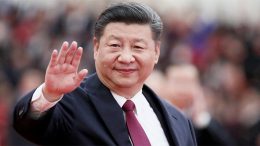
Xi Jinping Arrives In Spain With “Major Investment Projects And Trade Agreements” Under His Arm

From today until Thursday the President of China, Xi Jinping, is on an official visit to Spain. It is the first visit to Spain by a President of China for 13 years. According to the Ministry of Foreign Affairs, both countries will seek to advance the bilateral relationship in multiple areas, from bilateral political relations, geopolitics, economics and the educational-linguistic area to science, among others.
Forty years of democratic Spain: Haves and have-nots of labour market

Forty Years Of Democratic Spain: Haves And Have-Nots Of Labour Market

William Chislett | Spain has moved from a labour market characterised during the Franco regime by heavy state intervention, no free trade unions, the prohibition of strikes and lock-outs, a low female participation rate and paternalistic legislation to one that is flexible, but marked by consistently high unemployment.


TheRock

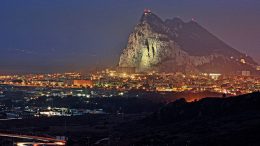
Will China Take Spain’s Side in Dispute Over Gibraltar?

Andy Mok via Caixin |  President Xi Jinping’s visit to Spain on his way to Buenos Aires at the end of this month will result in the usual and necessary flurry of declarations about strengthening bilateral relations centered on trade as well as discussions on how Spain might support China’s diplomatic initiatives in the EU.


Spain EU membership

Spanish Economy After EU Membership: Transformed But Vulnerable

William Chislett | EU and euro zone membership have been hugely beneficial. More than 30 years after joining the EU, Spain was still a net recipient of EU funds. Between 1986 and 2016, the country received €95 billion more than what it contributed (excluding co-funding of EU projects).


How much are Spaniards going to spend next year?

How Much Are Spaniards Going To Spend Next Year?

The Spanish economy is entering a more mature phase of the cycle and, therefore, its growth is gradually slowing down to levels that are more sustainable in the long term. In this context, CaixaBank Research wonders what trends can be expected in the main driver of the economy: private consumption. Following are their conclusions.


The Supreme Court decides that customers should pay stamp duty -Spanish banks rise 5%

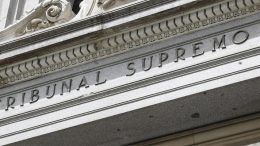
The Mortgage Tax Conundrum in Spain: The Government Corrects the High Court

“Never again Spaniards will have to pay the mortgage stamp duty”. With these words the Spanish president Pedro Sánchez announced a decree law and gave a new twist to the story of who should be responsible for this tax, just a few hours after the Supreme Court decided that it will be the customer’s duty. The way in which the highest court has managed the decision making process puts into question its credibility.


Forty years of Spanish Constitution, forty years of institutional stability

Forty Years Of Spanish Constitution, Forty Years Of Institutional Stability

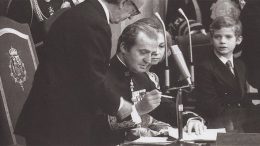
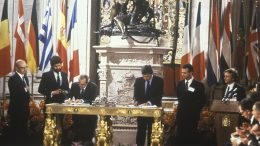
William Chislett | By the time General Franco died in 1975 Spain had undergone profound economic and social change, which laid the foundations for an even greater transformation over the next 40 years, but it was a long haul. The new constitution, drawn up by all the main political parties and approved in a referendum on 6 December 1978 by 88% of voters on a turnout of 67%, sealed the transition to democracy.


Forty years of democratic Spain: No resemblance to what it was

Forty Years Of Democratic Spain: No Resemblance To What It Was

On next December 6, the Spanish Constitution and therefore Spain’s democracy turns 40 years old after another 40 years of dictatorship. Until that day, The Corner is going to publish a series of articles written by William Chislett, associate analyst at the Elcano Royal Institute about, precisely, how much and and how deep the country has changed in these last 4 decades. Today’s story is just the beginning.