Global Economy: Heading Toward a Cliff
SHANGHAI | By Andy Xie via Caixin | The global economy is likely experiencing a bigger bubble than the one that unleashed the 2008 crisis, and should it burst the ensuing recession would be mammoth.

SHANGHAI | By Andy Xie via Caixin | The global economy is likely experiencing a bigger bubble than the one that unleashed the 2008 crisis, and should it burst the ensuing recession would be mammoth.

LONDON | By Barclays analysts | The two most important events for the market are at the end of the week – the ECB meeting and US employment report. Although no policy change is expected from the ECB, the market will be paying close attention to cues for a potential move in December.
WASHINGTON | By Tom Ferguson, Paul Jorgensen and Jie Chen via The Next New Deal | Bush and Cheney may have invented them, but many firms and industries at the heart of the NSA scandal have strong ties to the Democrats. This is the Hidden Corporate Cash Behind America’s Out-of Control National Surveillance State.
SAO PAULO| By Marcus Nunes | In response to Gavyn Davies, who thinks the Eurozone is a whole different galaxy: I have my doubts that “most central banks would take these symptoms as proof that monetary policy should be eased”. Most of them have behaved very badly (excepting the BoJ). Maybe in the dire conditions faced by the Eurozone they would act. This just shows how ‘unplugged’ the blokes at the ECB are!
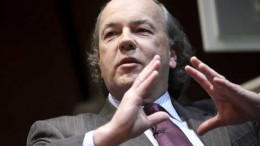
MADRID | By J. Luis Martín via TRUMAN | In the winter of 2009, lawyer, investment banker, and advisor on capital markets to the Director of National Intelligence and the Office of the Secretary of Defense, James Rickards took part in a secret war game sponsored by the Pentagon at the Applied Physics Laboratory (APL). The game’s objective was to simulate and explore the potential outcomes and effects of a global financial war. Two years later, Rickards published what would become a national bestseller, Currency Wars: The Making of the Next Global Crisis. TRUMAN spoke to him after he just finished writing its sequel, The Death of Money, The Coming Collapse of the International Monetary System, due out in bookstores in April 2014.

MEXICO CITY | By David Brunat | An explosive combination of fast-food sold in every corner of the country and soft drinks cheaper than water has made of Mexico the most obese country of all OECD country members, for the first time surpassing the United States (32.8% of Mexican population is severely overweight, against 31.8% in the US). Amidst a strong opposition from the industry, the Senate just passed a law to raise taxes to fast-food from 5 to 8%.
NEW YORK | The Corner Team | The U.S. has a 7.3% unemployment rate but its underemployment is estimated to be of at least 5%. “Underemployed” are those citizens employed part time, but want to work full time, or jobless. This adds to the Federal Reserve’s caution in deciding when to trim its monthly bond purchases. In the video (via The Next New Deal), Roosevelt Institute Senior Fellow and Director of the Bernard L. Schwartz Rediscovering Government Initiative Jeff Madrick explains three steps the government could take to address the jobs emergency.
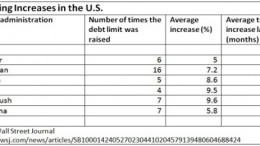
HAMBURG | By Dr. Beate Reszat| Shortly after the US default had been averted on October 16, the S&P 500 closed at an all-time peak of 1,744.50. Alan Wheatley (Reuters) commented enthusiastically: “If Wall Street’s record high is a signpost, the U.S. economy has every chance of pulling further ahead of a stuttering Europe despite new battles to come in Washington over the government’s budget and debt ceiling.” Does this mean that all the worries of the past weeks about a “Lehman moment” were nothing but hot air? Is the debacle that we observed nothing more than an episode in an endless soap opera that long ceased to impress markets?

WASHINGTON | By Pablo Pardo | A new crisis has hit the EU-US negotiations to create the transatlantic free trade area known as TTIP. Now, the main culprit seems to be Edward Snowden and his revelations about the US National Security Agency (NSA). US defense and national security apparatus have just ignored the situation. However, the concern is much more palpable in the US Treasury, the Commerce Department and the USTR.
BEIJING/ NEW YORK | By Zhang Yuanan, Chen Lixiong, and Chen Qin via Caixin | Major changes to the trade landscape are coming, meaning China must adapt or risk losing its growth momentum. Here’s why Trans-Pacific Partnership (TPP) stands out from many other trade talks.