
World economy


global growth

Will a Struggling Global Economy Survive the Coronavirus?

Atul Singh | The coronavirus outbreak is putting a clearly unsustainable global economy to the test.Coronavirus is China’s Chernobyl. It is finishing what Trump’s trade wars started. Global supply chains will change. Trade will slowdown. The decoupling of China and the US will continue. Even as these tectonic changes unfold, a global recession has become more probable.


OPEC post mortem

Pre-OPEC Meeting : Will The Organization Restore Brent Backwardation?

Nitesh Shah (Wisdom Tree) | With the coronavirus spreading around the world, the market is understandably scared that demand for crude oil will fall hard this year. Brent oil prices have fallen from a peak of US$68/barrel in the first week of January to US$56/barrel currently (24/02/2020). We believe that the backwardation in the Brent oil futures curve is generated by the fact that OPEC is ready to intervene.


Jay Powell

Emergency Move At The Fed: Cuts Rates By Half Point As Coronavirus Spreads

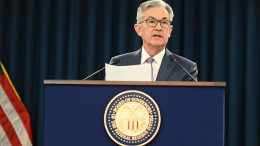
Ranko Berich (Monex Europe) | Jay Powell and the Fed have taken the warning financial markets have given about coronavirus over the past weeks to heart and brought out the big guns with a 50bp intra-meeting rate cut. This is a tool that has not been used since 2008, and comes after a serious worsening in the global macroeconomic outlook due to the Covid-19 outbreak shattering previous optimistic assumptions that it would be mostly contained within Q1.


central banks1

G7, Central Banks To The Rescue Of Coronavirus Damage On The Economy

Expectations for coordinated action from the main central banks is growing. The Fed’s messages will be particularly decisive as “it is the only with real capacity to influence the market and the determination to take strong action”, explain experts at Bankinter. The upcoming central banks’ planned meetings are: March 12 (ECB), March 18, the Federal Reserve (FOMC Minutes), March 19, the Bank of Japan and March 26, The Bank of England.  


Fiat Money

Fiat Money Will Most Likely Continue To Lose Its Purchasing Power Over Time

Degussa | Wherever you look: Prices for consumer goods, real estate, stocks and bonds are on the rise. That means that the purchasing power of money is on the decline. For if, say, stock prices go up, your money unit can buy fewer stocks. What it also means is: While people holding assets, whose prices increase, become “richer”, people holding money get “poorer”


Is it the Fed that has changed... or the world around it?

Treasuries Yields Plunged, Hiting Historic Lows. VIX Soared To 32

BBVA Research | Covi-19 jolts equities and sovereign yields again as mounting coronavirus cases outside China dashed hopes that the outbreak had been contained. U.S. Treasury 10Yyield hit historic lows, dropping below 1.30%. Elsewhere, the WHO stated that the covid-19 has the potential to become a pandemic, while the U.S. warned not to travel to Spain to avoid potential dangers.


relocalisation

Supply chains for USD22tn market cap come back home

The past three decades have witnessed a dramatic expansion in international trade and the globalization of supply chains. BoA Global Research’s macro teams already see a protracted pause in globalization. They go one step further and argue, in a break with the past, that the world has entered an unprecedented phase during which supply chains are brought home, moved closer to consumers, or redirected to strategic allies. This would have profound implications for automation and manufacturing, and creates myriad opportunities for the geographies to which supply chains are being redirected.


CisneNegro

Has the Black Swan landed?

Nitesh Shah, (Director, Research, WisdomTree) | “Nassim Taleb in his book on uncertainty defined “Black Swans”— extremely unpredictable events that have massive impacts on human society. One of the defining elements of Black Swans is that models can explain their existence after the fact. In September 2019 a report compiled at the request of the United Nations secretary-general said “If it is true to say ‘what’s past is prologue’, then there is a very real threat of a rapidly moving, highly lethal pandemic of a respiratory pathogen killing 50 to 80 million people and wiping out nearly 5% of the world’s economy.