
China Real Estate May Face ‘Year of Recession’
By Cao Wenjiao and Denise Jia via Caixin | After years of booming growth, China’s real estate sector, a major pillar of the world’s second-largest economy, is wobbling.

By Cao Wenjiao and Denise Jia via Caixin | After years of booming growth, China’s real estate sector, a major pillar of the world’s second-largest economy, is wobbling.

Intermoney | According to the global bank lobbying group IIF, global debt in 2Q18 fell by $ 1.5 trillion to $ 247 trillion thanks to the reduction between the financial sector and the governments of developed countries. Global debt fell to 317% of GDP, a figure that differs from the one provided by institutions such as the IMF due to the different treatment of information.

Alicia García Herrero | 2018 will be recalled as the year in which the US wake up to China’s economic power through a trade war. The question to ask ourselves now is how this may affect Europe. The first issue to realize is that European and US exports into China are very similar, which points to a potential substitution of American products in the Chinese market but also the other way around, namely substituting Chinese exports into the US by European ones.

In contrast to comparatively stable levels in the US, PIMCO strategists flag that European HY spreads have nearly doubled since October 2017 (see chart). As a result, and for the first time in over five years, high yield spreads are wider in Europe than in the U.S., despite their higher average credit rating

The biggest challenges facing the U.S. are deep and seriously jeopardize Americans’ future prosperity. Namely, soaring national debt, Social Security’s solvency and the lack of affordable health care. The official debt is $21.7 trillion

A report from IRC and Citi examines efforts of more than 20 cities spanning four continents to build inclusive communities. For example, it highlights that many cities are already allocating resources to support displaced populations and bolster integration.

Atul Singh | How much value have technological advances created? On one side are internet bears who point out that productivity has been falling and the internet is not a big a deal. On the other side are internet bulls who argue that the internet has unleashed a new wave of productivity that is not captured by current measures accurately.

S. Suresh |Decency and decorum in American politics will still be a distant dream, even if Democrats win the midterm elections on November 6.

By Jean-Maurice Ripert and Clemens von Goetze via Caixin | In just a few days, China will lift the curtain on its very first International Import Exposition in Shanghai. Along with many other countries, Germany and France will showcase their goods and services in Shanghai.
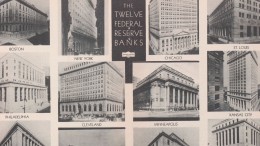
The Federal Reserve is more or less protected from the demands of political parties. But what about the influence from ‘special interest groups’ such as the banking industry on Fed policymaking? “There is hardly be any doubt that the Fed caters, first and foremost, to the needs of commercial and investment banks, ” says a report from Degussa.