
Report by Singular Bank
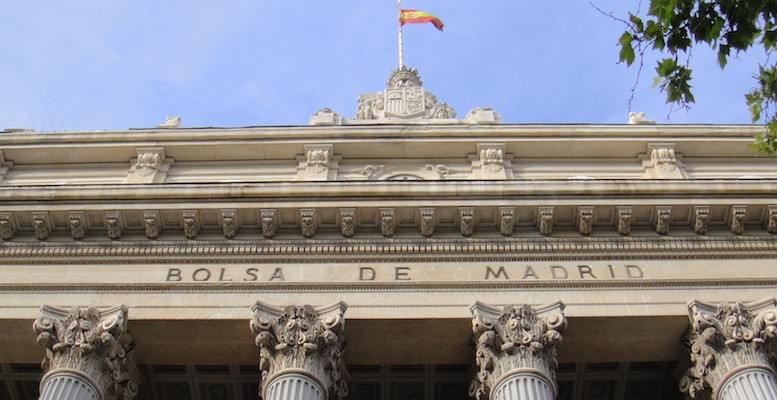
European stock markets closed lower during the session, weighed down by ongoing geopolitical risks surrounding Iran and the Strait of Hormuz. The IBEX 35 fell by 0.4%, and the Euro Stoxx 50 by 0.2%.
At the close of European trading, Wall Street was performing better than Europe thanks to a combination of lower-than-expected wholesale inflation, strong financial results and renewed momentum in the technology sector.
Oil was once again the main drag on Europe. Brent crude surpassed $85 per barrel during the session, driven by renewed tensions between the US and Iran and the reimposition of the US blockade on Iranian maritime traffic near the Strait of Hormuz.
The difference compared with previous sessions is that the energy shock did not dominate the entire market. In the US, producer price data was weaker than expected and, combined with the benign CPI figure from the previous day, reduced pressure on interest rate expectations. This reading allowed US technology and financial stocks to maintain a more positive tone.
The sector rotation was very clear: the energy sector is holding up thanks to crude oil, infrastructure technology is gaining support, whilst sectors more exposed to energy costs or European growth are lagging behind.
In Europe, the positive performance of the luxury sector was not enough to offset the drag from oil and geopolitical caution. The session leaves the market less directional than yesterday’s: there is no widespread flight from risk, but rather a rotation between energy, semiconductors, banks and defensive sectors.
Fixed Income
Fixed income showed mixed signals. In the United States, the downward surprise in the PPI reinforced the view that inflationary pressure is easing and led to falls in the segments of the yield curve most sensitive to interest rates. In contrast, Europe continued to be more influenced by the rise in Brent crude and the risk of energy-driven inflation.
The yield on the 10-year US Treasury fell to around 4.55 per cent, a drop of nearly 4 basis points. In Europe, the 10-year German Bund held steady at around 3.12 per cent, whilst the 10-year Spanish bond rose to 3.58 per cent, also up by nearly 1 basis point.
Commodities and currencies
Brent crude was trading at around $84 per barrel, still close to one-month highs, due to concerns over energy supplies in the Middle East. Although it retreated from its intraday highs, it has recorded a significant rise over the past month.
Gold remained close to $4,050 per ounce.
In the currency markets, the EUR/USD was trading around 1.142. The dollar lost some of its support due to moderating US inflation data, but remains attractive.


