
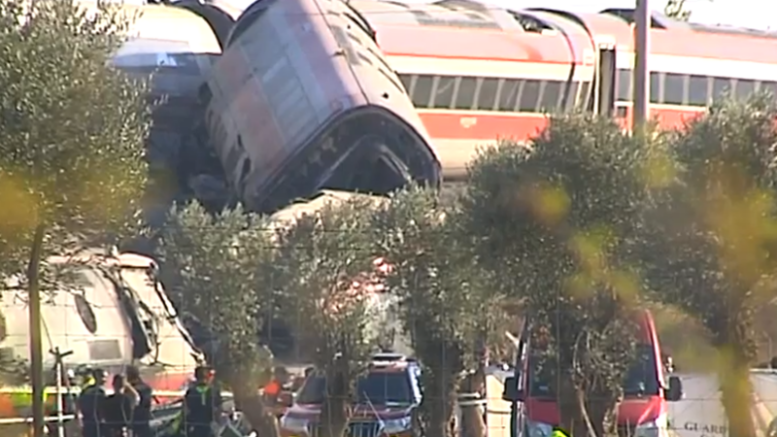
The collision of a Renfe High-Speed train (AVE) with a stationary Iryo train near Urda (Toledo) has left at least 68 people dead. A failure in the LZB safety system forced traffic to be managed manually. Subsequently, Adif’s control center authorized the AVE train to proceed without warning it of the stopped train ahead. The investigation will have to establish responsibility for this new disaster, which has disrupted the PSOE’s election campaign because, as Prime Minister Sánchez admitted, a succession of accidents of this magnitude in such a short period is “unacceptable.” Just nine months ago, Spain suffered another rail tragedy with the Adamuz accident on the same rail line (Madrid-Andalusia), which left 46 people dead. By sad coincidence, the train drivers’ union had called a strike for today—which remains in place—to demand “safety.” They claim that following the Adamuz accident, nothing was done to improve safety across Spain’s rail network.
In Moncloa, officials acknowledge the political severity of the accident, which once again calls rail safety into question. Sánchez has declared three days of official mourning and promised to determine accountability. “Experiencing two accidents in less than a year is unacceptable,” the Prime Minister said. The investigation and potential political fallout will mark the coming weeks. Transport Minister Óscar Puente acknowledged an IT glitch in the LZB safety system prior to the crash. The malfunction forced several trains to stop and traffic to be handled manually. However, Adif authorized the AVE to resume its route as normal, despite an Iryo train being stopped up ahead. Puente described the decision as “inexplicable” and initially attributed the tragedy to human error. Asked about his resignation, he stated that his priority is to clarify what happened, though PSOE officials are beginning to question whether he should remain in his post.
A new rail safety system for that line was put out to tender in 2021 and was supposed to be installed last January, but installation has not yet been completed. Meanwhile, independent experts estimate the maintenance deficit on a rail line that was once the envy of the world at more than €3.6 billion. The Madrid-Andalusia line was inaugurated in 1992, and experts assert that it should have been completely replaced after 30 years—especially considering that rail market liberalization has multiplied train frequencies and weight, accelerating infrastructure wear and tear.


