
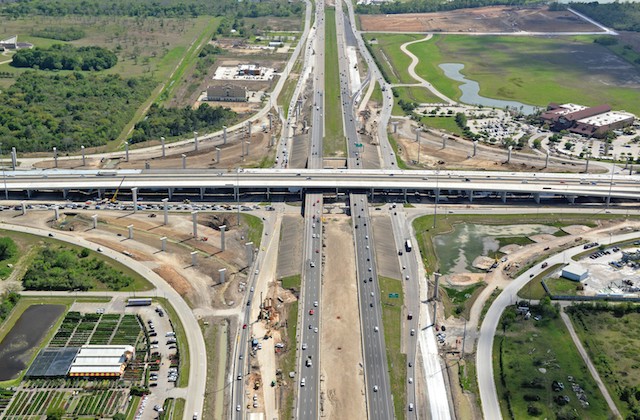
Spain is an undisputed global powerhouse in managing transport infrastructure and networks through public-private partnerships, and these three companies have progressively shifted away from low-margin pure construction to focus on long-term concession management, which provides recurring and stable revenues. The framework of the US plan would allow these companies to contribute private capital, manage the infrastructure, and structure the projects through Project Finance, benefiting from tolls or availability payments for decades.
It has therefore come as no surprise that ACS, Ferrovial, and Sacyr are on the list of companies participating in the first market-sounding round launched by the Department of Transportation. The three Spanish multinationals are willing to join the federal plan, provided it meets a set of conditions regarding legal certainty and, above all, the long-term profitability of the business.
Under the ‘America’s Great Corridors of Commerce’ initiative, featuring five major interstate corridors to be launched next year, the Trump Administration intends to roll out a macro-investment plan in power and digital networks by leveraging existing road and rail infrastructure—over 200,000 kilometers of highways and a similar length of railway tracks spanning the United States.
The US Government seeks to facilitate the installation of high-voltage power lines, fiber optics, water pipelines, and other utility networks within highway and railway rights-of-way, reducing the need for land acquisition and streamlining administrative and environmental procedures.
The US has presented the market with a plan driven by private initiative, featuring very long-term contracts (up to 50 years) remunerated through commercial revenues generated from leasing the infrastructure.


