Global economic losses caused by natural disasters reached $224,000 M, exceeding the historical average for the last 30 years. The increasing frequency of extreme weather events is forcing the financial system to factor in risks that were historically considered sporadic or idiosyncratic.
By Neuberger
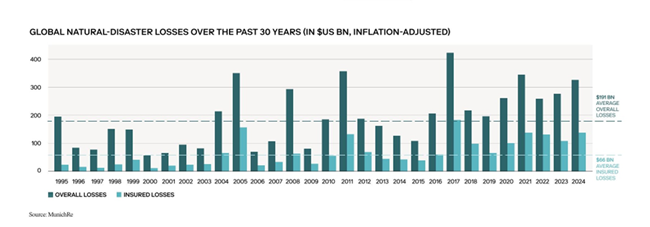
The physical effects of climate risk are becoming increasingly evident in the rising frequency and severity of natural disasters, and economic losses now consistently exceed historical Global economic losses caused by natural disasters reached $224,000 million, exceeding the historical average for the last 30 years. The increasing frequency of extreme weather events is forcing the financial system to factor in risks that were historically considered sporadic or idiosyncratic.levels. In 2025, damage caused by natural disasters reached $224,000 million globally. Of this total, insured losses accounted for some $108,000 million. Although total economic losses have fallen slightly since 2024, they remain above the historical average for the past 30 years. The year 2025 also marked the fifth consecutive year in which insured losses from natural disasters exceeded $100,000 million.
These losses are overwhelmingly attributable to meteorological events – such as floods, storms, wildfires and heatwaves – whilst geophysical risks, such as earthquakes, have accounted for a relatively small proportion of total losses. The geographical concentration of these losses remains pronounced, with almost 80 per cent of global insured losses occurring in the United States, reflecting both the high value of assets and the high exposure to climate-related risks such as hurricanes, severe convective storms and wildfires.
From an investor’s perspective, these trends highlight that physical climate risk is no longer an extreme risk, but a recurring macroeconomic shock. The rise in catastrophe losses is having an increasing impact on public finances, the affordability of insurance, the resilience of infrastructure and the volatility of corporate profits. As extreme weather events become more frequent, the financial system is being forced to internalise risks that were historically considered episodic or idiosyncratic.
Despite the rise in insured losses, a significant proportion of the economic damage resulting from natural disasters remains uninsured, leading to a persistent global protection gap. In 2025, approximately 52 per cent of global economic losses caused by natural disasters were not covered by insurance. This gap continues to place a disproportionate burden on governments, households and businesses, particularly in emerging and climate-vulnerable regions. It is important to note that the persistence of this protection gap reflects both affordability constraints and structural limitations in traditional insurance markets. As climate risks intensify, insurers have begun to reassess risk pricing, coverage limits and geographical exposure, in some cases withdrawing entirely from high-risk regions. This new dynamic risks creating a vicious circle in which rising physical risks reduce the availability of insurance, which would in turn further increase the proportion of losses borne by the real economy.
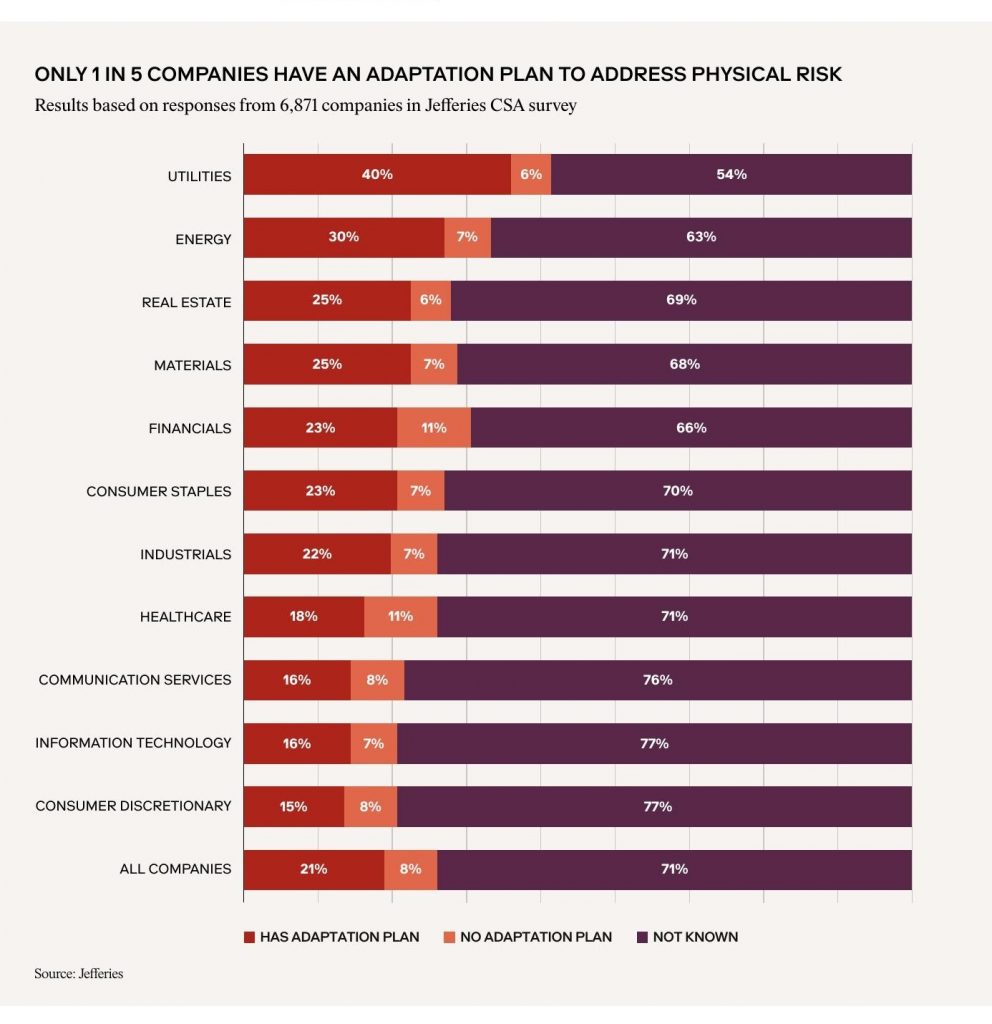
SwissRe estimates that a 3.2°C rise in global temperature by 2050 could reduce global GDP by 17 per cent. Even if warming is limited to 2.7°C – which is considered highly likely – S&P Global forecasts that large companies could face annual costs from physical risks of around 1.2 trillion dollars in the 2050s. Climate risks are particularly severe for companies with long-lived fixed assets and offices in regions increasingly exposed to extreme heat, drought and flooding; those with a high dependence on natural resources such as water; and those with value chains vulnerable to these hazards. Despite the recent policy measures adopted at COP30 to triple funding for adaptation by 2035 (though these are non-binding), a considerable gap remains: it is estimated that funding requirements for adaptation range from 284,000 to 339,000 million dollars per year until 2035, which is approximately 12 to 14 times current funding flows. Whilst the public sector is likely to provide the bulk of adaptation funding, this gap represents a significant opportunity for private-sector investment.
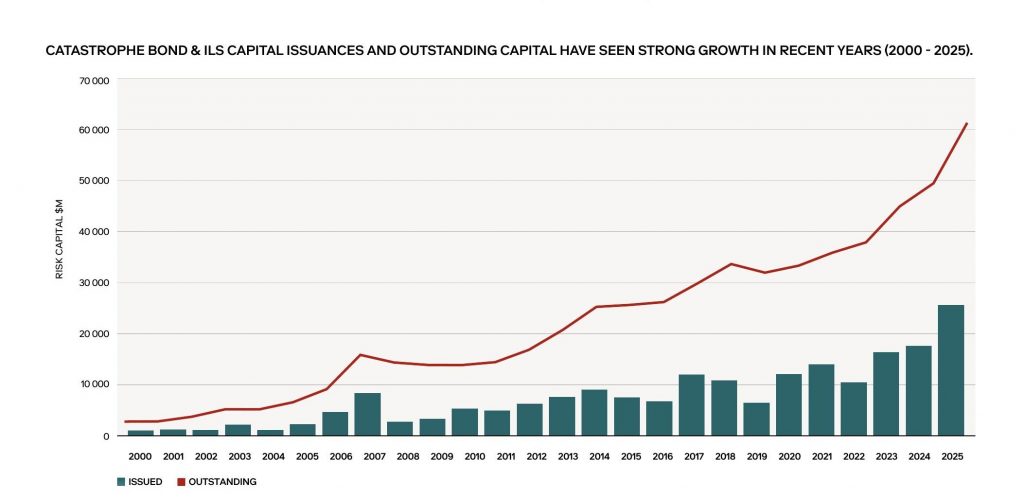
In this context, catastrophe bonds (CAT bonds) and the broader insurance-linked securities (ILS) market have become an increasingly important mechanism for transferring climate risk from insurers and governments to the capital markets. Globally, we have seen continued growth in CAT bond issuance, as issuers seek to diversify risk transfer beyond traditional reinsurance and secure multi-year protection against extreme events. In 2020, the value of outstanding CAT bonds nearly doubled compared with the previous decade, and new issuance reached a record US$25.6 billion. CAT bonds have also broadened their scope: whilst historically focused on hurricane and earthquake risk, they are now structured to cover additional risks, such as wildfires.
Looking ahead, CAT bonds are likely to play an increasingly important role in narrowing the global protection gap. Whilst they are no substitute for comprehensive adaptation and risk reduction measures, they represent a scalable financial tool that can mobilise private capital in support of climate resilience. As physical climate risks continue to rise, the integration of CAT bonds into broader adaptation and resilience strategies may become an increasingly important issue for both insurers and long-term investors.