Germany

germany's flag

Germany: the sick market of Europe?

BERLIN | Alberto Lozano | Some figures were already announcing during the last weeks that Germany was losing momentum. Its equity market also was the 3rd worst performer since the European market peaked on June 10th, so the GDP fall of 0.2% in the largest economy of the Euro area is not a surprise. A negative effect from the balance of exports and imports and a fall in construction are the main causes for this slight GDP decrease. However, both households and government consumed slightly more than in the previous quarter. Therefore, growth in consumption and imports might be a positive signal for the Europe’s largest economy in the coming quarters of 2014.


No Picture

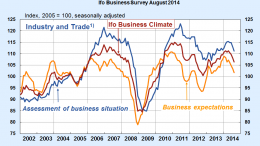
German investors lose their confidence in Europe’s growth engine

MADRID | By J. J. Fdez-Figares (LINK) | After the rises experienced by the European and American stocks on Monday, these markets showed yesterday certain weakness, leading to a mixed closing in the major indices in Europe and negative in US. Thus, and since the beginning of the day in Europe some profit taking by the short-term investors were observed, who profited from the rebound that many values experienced on the day before. As there was a lack of relevant developments in the three main geopolitical conflicts (Ukraine, Iraq and Gaza), the investors’ attention turned to macroeconomic data, particularly towards indices released yesterday by the German institute ZEW.


ForeignTradeStart06

Germany’s domestic demand might be taking the helm

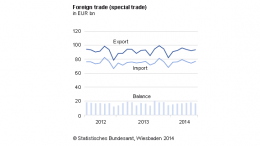
BERLIN | By Alberto Lozano | At the end of the week, good news are coming from Germany’s trade data. After calendar and seasonal adjustment, German imports rose by 4.5% on the month, rebounding from a sharp fall in May (-3.4%) with the highest month-on-month increase since November 2010. In addition, German exports increased by 0.9%, narrowing the criticised surplus to 16.2 billion euros from 18.8 billion the previous month.


120906Bolsa2

Ibex: -5.8% in the first 5 sessions of August

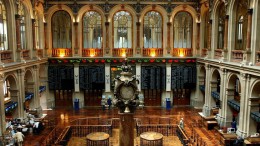
MADRID | By J. J. Fdez-Figares (LINK) | European stocks closed yesterday again with notable declines -with the exception of the Swiss- pressured by a complicated geopolitical scenario, while the macroeconomic figures in the region continue to disappoint. Thus, European stock markets began the day in negative tone after economic sanctions agreed by Russia against the European countries and with the speculation that the country will send troops to Ukraine. The Spanish index Ibex 35 goes through the worst beginning of August since 2011.


NewOrdersStart061

Russian sanctions start to impact on Europe’s export powerhouse

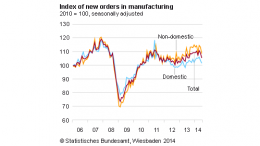
BERLIN | By Alberto Lozano | While yesterday downs on Wall Street were marked by rising tensions in Ukraine, negative data from German manufacturing orders also seem to to be influenced by the geopolitical risks and the Russian sanctions’ impact on the eurozone’s economic recovery.


germany growth

Is Germany’s growth losing momentum?

BERLIN | By Alberto Lozano | After Q1’s strong growth, numbers show that the German economy has slowed down during 2Q’s first two months, as Bundesbank reported this week. Both the industrial sector and the construction have fallen compared with the 1Q.  However, it seems that Europe’s economic powerhouse will recover its strength in the coming months.


No Picture

Germany: Austerity actually works

FRANKFURT | By Lidia Conde | Is austerity at all costs killing us? Germany answers with a resounding “no.” Even though the North-South axis in the European policy is more present than ever, for Berlin “austerity does not punish.” On the contrary: it even purifies. Furthermore, the Stability Pact offers enough flexibility so as to boost growth. There is no room for revision or debate.


No Picture

Germany’s monthly decline is the biggest in two years

MADRID | The Corner | European and US markets fell on Monday while waiting for the Wall Street’s quarterly results season to begin. The session began without a clear trend, but the European markets went downwards when Germany published disappointing industrial production data in May. This monthly decline is the biggest in two years and might be the result of the 1st May long weekend and the geopolitical tensions deriving from the crisis in Ukraine.


lander

German budget consolidation under threat by its own Länder

BERLIN | Alberto Lozano | While German Finance Minister Wolfgang Schäuble preaches public budget consolidation all around the Eurozone, some Länder don’t seem to be taking his prescriptions seriously. Their deficits continue to grow in 2014 and moving away from the zero deficit goal in 2020 as required by the country’s constitution. 


No Picture

Asked for wider liberalization, many Germans don’t see more room for it

BERLIN | By Alberto Lozano | Although when speaking of reforms nobody is pointing to Germany, international organizations are pushing for it in the country, especially in the services sector. The goals are boosting consumption and rebalancing the euro monetary union, and higher productivity in services sector becomes a challenge with large potential gains for both Germany and the whole Eurozone. But some voices insist this won’t easily happen.