
France’s German Mirror
Project Syndicate | By Dominique Moisi| In the mirror of Germany, the French must ask themselves fundamental questions. Have they made the right choices in terms of leaders and policies in recent decades?

Project Syndicate | By Dominique Moisi| In the mirror of Germany, the French must ask themselves fundamental questions. Have they made the right choices in terms of leaders and policies in recent decades?

BARCELONA | CaixaBank researchers | The euro area’s drop in GDP was slightly more than expected. The European Commission expects a 0.3% drop in GDP in 2013, but the latest economic figures point to a slow recovery.
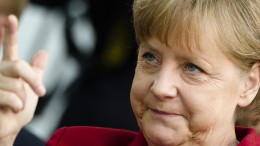
BRUSSELS | by Eberhard Rhein | However important balanced budgets might be for Europe in view of its rising social charges, in particular the huge burden resulting from an ageing population, Germany does not deserve praise for having precipitated the balancing of its budget.
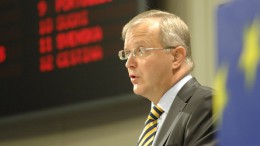
MADRID | Something is moving in the EU. Those who up to now advocated doses of further austerity to cure Euro zone ailments, start faltering at the huge damage inflicted on the economy.
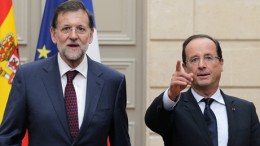
MADRID | By Julia Pastor | Javier Flores, head of analysis at Asinver: “France’s economic system will not fall into bankruptcy, but the French model cannot be considered as a superpower any more.”
German exports provided the government with proof that the country’s economy isn’t immune to the crisis affecting the economies in the south of Europe.
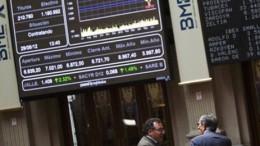
Klaus Hafemann, director of the Cologne Institute for Economic Research: “Almost no German likes the idea that the ECB could expand its monetary-policy mandate to actively finance states. But sometimes you have to do things you do not like.”
MADRID | Will European leaders ever jointly move forward? The more the global economy slows down and recession looms too over core euro zone countries, the farther Europe finds itself from agreeing in letting the central bank do its work.
Philipp Rösler, vice chancellor and federal minister of economics and technology of Germany, used Tuesday in London some of the toughest language in defence of further austerity for the euro zone.
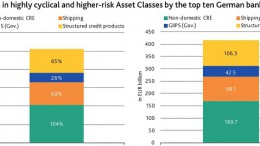
Although German banks’ regulatory capitalisation hardly makes news, the latest report on the industry by risk qualification agency Moody’s points at high leverage and exposures worth noting down.