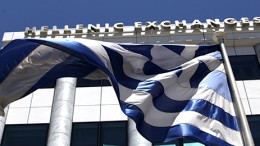
Who can blame Greek voters?
By Benjamin Cole via Historinhas | The unemployment in Greece is 25 percent. The Greek economy has shrunk by 29% since 2009. That is a full-blown economic depression, an outright failure of macroeconomic policy.

By Benjamin Cole via Historinhas | The unemployment in Greece is 25 percent. The Greek economy has shrunk by 29% since 2009. That is a full-blown economic depression, an outright failure of macroeconomic policy.
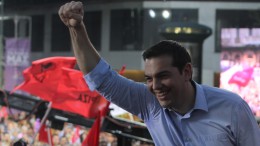
MADRID | By JP Marín Arrese | The landslide victory snatched by leftwing Syriza plus the sizeable score recorded by parties opposed to the austerity measures represents a challenge to Europe’s orthodoxy in addressing real adjustment. Greek voters have voiced their rebuke to policies encompassing significant sacrifices but failing to redress a dismal economic record. Scrapping key elements of the welfare state and imposing harsh conditions on citizens has resulted in widespread poverty. In addition, the sentiment the troika was running the country has infuriated many of those going to the polls on Sunday. For all the popular support received, Tsipras faces a formidable challenge ahead in delivering his election promises.

MADRID | By Sean Duffy | Victory for the left-wing party of Alexis Tsipras has brought the European project into unchartered territory. The result has given the new Government a mandate for change, but the game of poker may be just beginning.
By Gabriel Sterne via MacroPolis | It is easier to write down big questions on Greece’s future; harder to answer them: (1) Will Syriza win with an overall majority?; (2) Will a new programme be agreed in time?; (3) To what extent will it stay on track?; (4) How much additional debt relief and financing will the Troika give to Greece, and in what circumstances?; (5) If and when the wheels come off the programme, is an exit inevitable? Would it be managed or chaotic? One thing we can be sure about though. The scene is set for a political showdown, the likes of which the Euro-crisis has not yet seen.
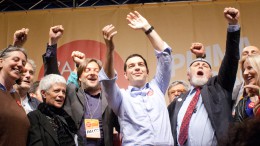
PARIS | By Francesco Saraceno via MacroPolis | It is most likely that from the elections of January 25 will emerge a SYRIZA-led government, the main uncertainty being how large a coalition Alexis Tsipras will have to gather to obtain a comfortable parliamentary majority. This is seen with a fair deal of preoccupation in Europe. A preoccupation that does not seem warranted. SYRIZA is no longer the radical party of the beginning, which called for the exit from the euro and for a default on Greek public debt.
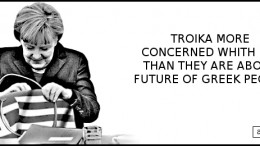
MADRID | By Álex García.
ATHENS | By Nick Malkoutzis | Prime Minister Antonis Samaras has a habit of defending his government by saying that his aim is to make Greece “a normal European country.” Whatever he may mean by this and however genuine he may be in wanting Greece to recover from its long crisis, this is an infuriatingly patronising comment. Intentionally or not, it aligns Greece’s prime minister with all the cranks in Europe and Greece’s misinformed critics beyond who view the country as some kind of basket case.
ATHENS | By Yiannis Mouzakis via Macropolis | The total amount of loans the eurozone and the International Monetary Fund supplied to Greece between May 2010 and the most recent disbursements last summer stand at 226.7 billion euros. This is equivalent to almost 125 percent of Greece’s economic activity in 2014. There seems to be a general misconception that feeds a misleading narrative in which the loans were used to keep the Greek state afloat, maintain its basic operations and pay salaries of doctors, teachers and policemen.
MADRID | By JP Marín Arrese | As Greece plunges again into wild uncertainty, following a call for snap elections, once again the Eurozone shivers at the prospect of a full-fledged crisis. Even if the flight for safety has reduced the bund rates to fresh lows, no other economy has come under attack for the time being. But should Syriza emerge as the winning party in the January polls, the truce might be over.

MADRID | By Ana Fuentes | The possibility that leftist party SYRIZA wins next Greece’s elections on January 25th is hitting the European markets since this may involve a new kind of arrangement with Brussels about the country’s bailout and the precautionary line. According to Greek journalist at Macropolis, Nick Malkoutzis, “if the party offers structural reforms that would clean up Greek politics, improve tax collection and make the public administration more efficient, the Eurozone might be prepared to listen to what SYRIZA has to say”.