
Greece

No Picture

Falling debt against increasing GDP

MADRID | By Luis Arroyo | What good does it do a falling debt if nominal GDP is increasing? According to the Real World Economy in Greece, the households’ debt went as shown in the chart. That is, the nominal value of the existing debt has dropped, but it has increased in relation to the income or the GDP with which it is paid. And this, ladies and gentlemen, is the best expression of the Debt Deflation concept.
brazil soccer wcup japan greece 32739155

World Cup: Samaras shoots, Samaras scores!

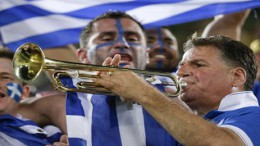
ATHENS | By Nick Malkoutzis via MacroPolis | “Samaras rescues Greece” – it’s the headline the prime minister and many in his office would have cherished. But Giorgos Samaras, the striker without a club, has beaten premier Antonis to the title of saviour thanks to his injury time penalty on Wednesday, which ushered Greece into the second round of the World Cup for the first time in its history. 


No Picture

Greece: Majority of services sectors still see contraction in turnover in Q1 2014

ATHENS | Via Macropolis | The evolution of turnover indices for the services sector showed 8 out of the 14 services activities posted a contraction in Q1 2014, according to the Hellenic Statistical Authority (ELSTAT). The highest drop was recorded in architectural and engineering activities (down 27.2 percent), cleaning activities (down 17.2 percent) and advertising and market research (down 13.3 percent).


greece

Greece: In the absence of light, darkness grows

ATHENS | By Nick Malkoutzis via MacroPolis | The May 25 result should have been a watershed moment, prompting Greece’s decision makers to seriously contemplate the mistakes that have fed the extremist monster: implementing drastic austerity while ignoring the social safety net, engaging in relentless artificial political polarisation, ignoring education, treating immigration with malevolent neglect, undermining institutions, snubbing justice and, when all else failed, attempting to cosy up to Golden Dawn and adopt some of its agenda.


No Picture

How Greek banks moved into a new era

ATHENS | By Manos Giakoumis via MacroPolis | The core Greek banks reported first quarter (Q1) results in the last three days of May. The release of the results was the last act in a series of important developments for the Greek banking market over the past two months. These developments constitute the third phase of the new era for Greek banks, which started two years ago. 


No Picture

Elections results present fresh challenges for SYRIZA and New Democracy

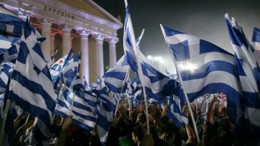
ATHENS | By Macropolis | The final results from Sunday’s European Parliament elections confirmed that SYRIZA gained a victory of 3.9 percentage points over New Democracy but the outcome of the ballot left both parties with much to think about in the weeks ahead. SYRIZA attracted 26.6 percent of the vote, which is slightly down on its share of the vote in the June 2012 elections. New Democracy received 22.7 percent but pointed to the 8 percent that PASOK’s Elia alliance gained as evidence that the coalition retains a clear mandate to continue governing.


Syriza

Greek politics in thrall to new faces and old ideas

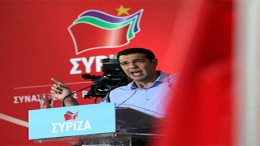
ATHENS | By Nick Malkoutzis via Macropolis| SYRIZA leader Alexis Tsipras was 32 when he burst onto the central political scene in Greece by attracting 10.5 percent of the votes in the Athens municipal election in 2006. At the time, it was unprecedented for such a young candidate, especially one representing a left-wing party, to gain this level of support. Eight years on, and with Tsipras leading SYRIZA, 33-year-old Gabriel Sakellaridis gained 20 percent for SYRIZA in the electoral contest for the Athens mayorship.If we use this as a yardstick to measure the party’s progress, one can only conclude that SYRIZA has made big strides.


No Picture

Building activity in Greece continues to crumble

ATHENS | By Macropolis | Greek building activity (as measured by the number of building permits) retained on a downward curve for the third straight month in February, retreating by 20.7 percent according to the Hellenic Statistical Authority (ELSTAT). 


germany in greece

€ 21,717,120,000

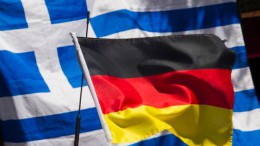
ATHENS | By  Yiannis Mouzakis via Macropolis | This is the total amount of money that has left German coffers since the Greek crisis started in 2010. It corresponds to Germany’s portion of the European Stability Mechanism’s (ESM) paid in capital, which was announced on May 1 as the fund reached its full capital amount following the transfer of five installments since the end of 2012. Germany’s participation in the euro crisis mechanisms, aside from the ESM paid in capital, has been in the form of guarantees. It all started with the bilateral loans to Greece which every country apart from Germany provided directly. Berlin only gave state guarantees to its AAA-rated development bank KfW. The German taxpayer did not have to bear any cost for this transaction.