
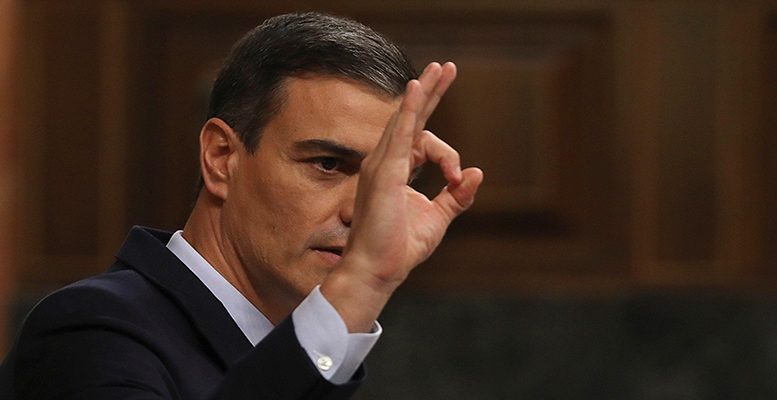
The country is gridlocked. And yesterday this became clear to everyone. Yesterday, the Prime Minister appeared before Congress to answer for all the corruption cases surrounding him—within his family, his party, and his Government. And as expected, he limited himself to asserting that “he neither knew about it, nor would he have tolerated it.”
Furthermore, although Puigdemont’s party—whom Sánchez granted amnesty in exchange for secure investiture—urged him to “do like Starmer” and step aside so someone else could assume the presidency, Sánchez reiterated that he will continue as president “because the question is not ‘why do we keep going?’ The question is, ‘how could we not keep going?'”
Lacking a parliamentary majority for months—yesterday it was confirmed that 188 MPs do not back him—cornered by corruption, and discredited both inside and outside the country, the Prime Minister seems to have long lost all touch with reality. Or perhaps he is convinced that a parallel reality exists, one that he builds with his accomplices in the party and the Government, alongside a long list of aligned media outlets.
But reality, stubborn as it is, prevails. Yesterday, after it became known that the Civil Guard is accusing Zapatero—”the moral lighthouse of the Socialists”—of new offences, Sánchez’s wife had to surrender her passport to the judge and guarantee that she will appear in court every fortnight (as she stands accused of several offences ranging from misappropriation of funds to influence peddling).
After failing to present a single Budget so far this legislative term—which began in the summer of 2023—and thus having flagrantly breached the constitutional mandate, the Prime Minister now claims he will present the 2027 Budget. He knows he will not be able to pass it, and this will allow him to call early elections at the beginning of 2027. In short, just like in any normal democracy: if the budget cannot be passed… elections.
This will allow Spain to change its Government months before the municipal and regional elections next May, where the PSOE will try to hold onto the few strongholds it still retains.
If he did not do it this way, if municipal and regional elections were held before the general election, the electorate would give Socialist mayors and regional leaders the boot they are dying to give Sánchez. And that would make it impossible for him to maintain the iron fist control he currently holds over the PSOE. So, general elections first, and a few months later municipal and regional ones, in a new attempt to entrench himself—no longer just in La Moncloa, but within the PSOE itself. As the King rightly pointed out in a recent speech, these are indeed “dark days.”


