

Articles by The Corner

About the Author

The Corner
The Corner has a team of on-the-ground reporters in capital cities ranging from New York to Beijing. Their stories are edited by the teams at the Spanish magazine Consejeros (for members of companies’ boards of directors) and at the stock market news site Consenso Del Mercado (market consensus). They have worked in economics and communication for over 25 years.
No Picture

Renewables in Europe triple US’ investment in shale gas

MADRID | The Corner | Head of Economics at the International Energy Agency remarked that “the investment in renewables in Europe has tripled the US’ investment in the entire shale gas production.” Prices are 20% below the right level to recover the cost of new investments due to the existence of overcapacity and subsidised prices in renewables.


apple ireland

EU’s probe on Apple puts multinationals tax deals under the spotlight

MADRID  | The Corner | The European Union may get tough on its country members having sweetheart tax deals with global corporations. So far Ireland (and possibly Luxembourg and the Netherlands soon) will have to submit information about its fiscal arrangements granted to multinationals like Apple, Amazon or Starbucks. The move came after last year the US Senate accused Ireland of giving a special fiscal treatment to Apple. Where are the loopholes?


No Picture

Debt markets’ rally triggers bubble concerns

MADRID | By Francisco López | It is not the first time economists, analysts and authorities recently talk about a possible bubble in the debt markets. But the latest, strong drops in peripheral bonds, in all-time minimums, have prompted alarms: there is too much euphoria and fixed-income market’s last moves doesn’t make sense.


No Picture

Easy money, stronger currency?

LONDON | By Chris Walker and Marvin Barth at Barclays | Despite the ECB delivering more easing than expected, the EUR remains close to the levels heading into Thursday’s meeting. Did the ECB then fail? In a word, no. The ECB’s objective is to raise inflation from unacceptably low levels well below its mandate of “less than but close to 2%” and a crucial element of doing so is to keep inflation expectations anchored near the Bank’s target.


No Picture

Do not be scared by these maximum levels!

MADRID | Ofelia Marín-Lozano | Stock markets are at maximum levels, but this is somehow tricky: such levels usually cause vertigo, whereas minimum levels lead to appetence for indebtedness and need to look for higher risk alternatives for investors who seek the actual yield.


No Picture

EU banks still owe €450bn from last LTRO

MADRID | The Corner Team | Eurozone’s banks have yet to pay back €450 billion from the 2012 long-term refinancing operation or LTRO. Executive Director in Global Cash Equity Sales at JP Morgan Hugo Anaya maintains a positive outlook and believes that even the P/E re-rating in the Euro stock exchange may continue.


INFLATION EXPECT

Why ECB’s measures may not fix lending nor inflation

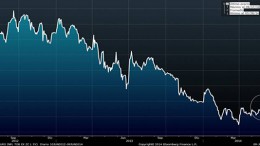
MADRID | The Corner | Despite markets’ euphoric celebration of Mario Draghi’s last words, some remain skeptic about them being the panacea for inflation and the lack of credit in the eurozone. Check the graph above: 5-year swap rates show that inflation expectations have only gone from 1.21/1.24 in May to 1.28/1.24. in June. Nothing to go crazy about, huh?


No Picture

DAX rocketing, Spanish risk premium at 120bp (and financing costs match US)

MADRID | The Corner | Despite the good performance of Western equities, many values are beginning to show signs of vertigo that could lead them to correct some of the gains of the past weeks in the coming days. In addition, the fact that trading volumes are shrinking as indexes advance is a clear sign that there are investors who feel dizzy levels. Therefore, Link experts point out, we shouldn’t rule out some small reductions in the short term even if it’s in an upward trend context.


No Picture

What is necessary to reactivate credit?

MADRID | By Ofelia Marín-Lozano | Now that stock markets are at  maximum levels (absolute maximum for S&P 500 and relative one for Eurostoxx 50), stress tests are decisive to reactivate credit. They are already in the first phase (which consists in evaluating the assets’ quality or AQR) and the overall outcomes will presumably be published in November. It seems likely that credit will recover sooner, inasmuch as banks know their individual results and the ECB may advance some messages.