
Articles by The Corner

About the Author

The Corner
The Corner has a team of on-the-ground reporters in capital cities ranging from New York to Beijing. Their stories are edited by the teams at the Spanish magazine Consejeros (for members of companies’ boards of directors) and at the stock market news site Consenso Del Mercado (market consensus). They have worked in economics and communication for over 25 years.
mexico

In Mexico no one trusts the economy

MEXICO CITY | By David Brunat | It is possible to be one of the world’s major emerging markets, a country called to deeply influence the global economy in the next decades, and at the same time be seen by your own people as a very unreliable nation business and invest wise. This is Mexico, the internally less trusted country in the whole OECD.

No Picture

Spanish companies exposure to Argentina’s devaluation, near zero

MADRID | By The Corner team | The Argentinian currency’s fall is the biggest in 12 years with a yearly drop of 17%. Although the key for European peripheral countries may be other countries’ contagion like Brazil, Mexico or Venezuela, their exposure to Argentina is moderate. In the case of Portugal it is almost near zero. And what about Spain, specifically?


No Picture

Argentina’s Peso devaluation “bites the bullet” without a full set of teeth

NEW YORK | By JP Morgan’s Foreign Exchange team | A devaluation unanchored (at least so far) by a needed broader anti-inflation plan can only induce expectations of further devaluation in Argentina (if the government is effectively adopting a free-float) or a resumption of reserve loss (when and if the government intends to subsequently resume its Foreign Exchange intervention).


New Deal

The Fed has Showed Why Fiscal Policy is Still Important

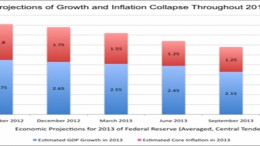
NEW YORK | By Mike Konczal via Next New Deal | One way of judging how the economy evolved in 2013 is to compare it to the Federal Reserve’s projections of it. As some market monetarists believe, these projections aren’t neutral projections of inflation and growth but also a communication of what the Fed thinks about what it can accomplish. So, how did the Fed’s projections for 2013 turn out? Did the economy end up how the Fed said it would when it announced expanded monetary policy?


No Picture

Gas pipeline from Russia to China “sure thing” for 2014

COMMENTS FROM ASIA-PACIFIC by Ray Kwong | Beijing and Moscow have been talking about building a 2,500-mile pipeline to link China with Russia’s plentiful natural gas for over 10 years, but thus far China has refused to pay Russia’s price. That may soon change, however, as China faces both supply gaps beyond 2017 and growing public anger over pollution.


Cyprus

A macroeconomic assessment of the Cypriot economy after the haircut

ATHENS|By Marios Zachariadis via Macropolis| The apparently fast adjustment of the Cypriot economy and the private (non-bank related) sector in particular, has helped facilitate a smaller than anticipated drop in consumption and GDP as the impact of reduced nominal salaries on consumption has been somewhat alleviated by falling prices, along with the use of past savings.


No Picture

Spanish Banking Sector Smiles Again Thanks to 2013 Business Results

MADRID | By Francisco López | The new season for presenting results starts this week with much better expectations than in previous years. After two years recording negative results in Spain, most market watchers consider that 2013 allowed the return to positive figures thanks to cost reductions, the increase in financial operations, the low interest margin and a lower impact on the accounts of the harsh restructuring process started in 2009.


No Picture

Greece: The improving economy supports a government already in combative mode

LONDON | By Fabrice Montagne at Barclays | Recent economic data suggest that Greece’s economy is improving. While this is not enough to change our current cautious growth forecasts, it does provide some support for the government as it enters a very difficult period, having assumed the EU presidency, and faces troika negotiations and domestic political opposition.