
Investing in Europe in 2014, A Wise Choice?
Via Credit Suisse | This year will be remembered as a strong year for global equities. While prices are expected to continue rising in 2014, the odd bout of adjustment will provide opportunity.


Via Credit Suisse | This year will be remembered as a strong year for global equities. While prices are expected to continue rising in 2014, the odd bout of adjustment will provide opportunity.
BEIJING | By Liu Xiao via Caixin | The People’s Bank of China is the first regulator in the world to issue rules on the virtual currency, a move that prevents a Bitcoin breakthrough. Apparently, what really concerns the central bank is bitcoins replacing the yuan.
LONDON | Barclays analysts | The global recovery remained modest in 2013, inflation was somewhat lower than expected, and monetary policy in the developed countries became even more supportive. While these fundamentals would normally suggest that bonds would outperform stocks, the opposite occurred, and in a very big way: bond prices plunged and equity prices soared.

WARSAW | By L. Guza at Dziennick Gazeta Prawna via Presseurop | EU labour ministers are meeting today to agree on amendments to the 1996 Posted Workers Directive, but the changes demanded by some member states to fight social dumping from countries including Poland will hamstring the free flow of workers and benefit middlemen.
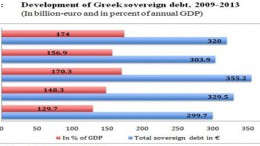
By Jens Bastian at The Agora | The two economic adjustment programmes for Greece from 2010 and 2012 as well as the sovereign debt restructuring from April 2012 and the debt buyback initiative in December of the same year have had a significant impact on the debt profile of Greece as a sovereign debtor. Greece’s creditor structure in 2013 compared to the point of departure in 2010 hardly bears any resemblance.
The two economic adjustment programmes for Greece from 2010 and 2012 as well as the sovereign debt restructuring from April 2012 and the debt buyback initiative in December of the same year have had a significant impact on the debt profile of Greece as a sovereign debtor. Greece’s creditor structure in 2013 compared to the point of departure in 2010 hardly bears any resemblance.
– See more at: http://www.macropolis.gr/?i=portal.en.the-agora.672&itemId=672#sthash.BZtuYz92.dpuf
The two economic adjustment programmes for Greece from 2010 and 2012 as well as the sovereign debt restructuring from April 2012 and the debt buyback initiative in December of the same year have had a significant impact on the debt profile of Greece as a sovereign debtor. Greece’s creditor structure in 2013 compared to the point of departure in 2010 hardly bears any resemblance.
– See more at: http://www.macropolis.gr/?i=portal.en.the-agora.672&itemId=672#sthash.BZtuYz92.dpuf

KIEV | By Gazeta Wyborcza via Presseurop | Anti-government demonstrators in Kiev on December 8 destroyed a statue of Lenin, which they said symbolised Russia’s dominance over Ukraine, reports Gazeta Wyborcza.
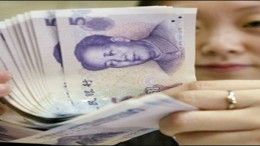
BEIJING | By Wang Yong at Caixin | In China, the law on illegal fundraising keeps public deposits from fleeing their arranged marriage with state-owned banks, stifling fresh ideas in finance.

HONG KONG | By Reuters | The world’s most valuable jewellery retailer Chow Tai Fook, which counts Cartier and Tiffany & Co as competitors, is on a quest to conquer the hearts of China’s future big spenders. Its weapons of choice: Hello Kitty and Winnie the Pooh.
AMSTERDAM | By Paul Scheffer at NRC Handelsblad via Presseurop | If the EU is to continue to exist, then its representatives will have to be clear about their ultimate objective. This should not be a federation of states, but a Union which sets its sights on further horizons, defends its diversity, puts an end to its expansion and establishes a legal basis for further integration, says academic Paul Scheffer writes. Excerpts.
Via Credit Suisse | Following the global financial crisis, major central banks have taken unprecedented policy actions in a bid to support the global economy and address short-term financial risks. In the following video, thought leaders from the Credit Suisse Research Institute discuss the use of these actions to attack crises, as well as the challenges associated with exiting these unconventional instruments in the coming years. [NOTE: The views expressed in this video are the interviewees’ own and do not necessarily reflect The Corner’s editorial policy].