Articles by The Corner

About the Author

The Corner
The Corner has a team of on-the-ground reporters in capital cities ranging from New York to Beijing. Their stories are edited by the teams at the Spanish magazine Consejeros (for members of companies’ boards of directors) and at the stock market news site Consenso Del Mercado (market consensus). They have worked in economics and communication for over 25 years.
Acciona

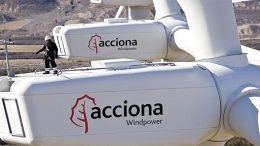
Acciona: When The Subsidiary Is Worth More Than The Parent Company

T.C. | Acciona approved yesterday the spin-off of its green energy subsidiary, Acciona Energía, in order to float up to 30% of the capital of this subsidiary, which the press and some Spanish analysts want to value at 12 billion euros, although on 31 March Acciona’s capitalisation on the Spanish stock market was “only” 8 billion euros. The deal could allow Acciona to reorganise and reduce its debt, which currently stands at 6.858 billion euros, of which 2 billion euros matures this year.



CGPJok

2,500 Judges Denounce The Spanish Government In Brussels For Attacking “Judicial Independence”

T.C. | Faced with the impossibility of reaching a sufficient parliamentary agreement (it requires an agreement with the opposition) to renew the members of the General Council of the Judiciary, which has been in office for two years, the coalition government of the PSOE and UP passed a rapid reform that ties the Council’s hands and feet and prevents it from making appointments while it is in office. Thus, it is a Council “in functions” but unable to function.


digital dollar

The Life Of A Digital Dollar

Alger (La Française AM) | With the rise of digital payments, the economics of credit and debit transactions has been a hot topic as investors try to figure out the best places to invest in the payment ecosystem. So where does your digital dollar go?


melia vietnam

Spain: Hotels For Sale

T.C.| The large Spanish hotel chains are seeking liquidity by selling assets and are opting for the ‘sale & leaseback’ option to maintain management. According to Meliá’s director of real estate, Mark Hoddinott, the group is identifying assets worth between 150 and 200 million. NH, the Spanish chain controlled by the Thai group Minor, is also considering the sale and leaseback of several hotels. According to Moody’s, the group expects to generate more than 200 million in additional cash. RIU, a partner of the German group TUI, has three hotels for sale: in Madeira (Portugal), Lanzarote (Spain) and Panama with a combined valuation of around 250 million euros. 


Latin America is the fourth largest investor in Spain?

Spain Is The Second Biggest Destination For Latin American Investment

ICEX-Invest in Spain | Latin investment is a consolidated and growing phenomenon worldwide, representing over 750 billion dollars. Spain is a key destination for the internationalization of Latin American firms and has become their main gateway to Europe. In fact, in the last decade, Latin America has become the fourth largest investor in Spain, behind only the US, the UK and France, and ahead of countries such as Germany and China. The region’s cumulative investment in Spain now stands at 42,663 million euros, 61,104 million if investment in holdings is included. Since 2010, Latin America has invested an annual average of €3.8 billion in Spain.


Food industry: Feeding the future, feeding a growing planter

Sustainability Rankings Don’t Always Identify Sustainable Companies

Rumina Dhalla via The Conversation | British American Tobacco, Coca-Cola and Glencore were recently ranked in the top five most environmentally and socially responsible companies on the FTSE 100. As kids, we learned that smoking kills, yet British American Tobacco has a place at the top of the list, suggesting it’s a highly responsible company. Obesity, cardiovascular disease and diabetes are life-threatening diseases, yet Coca Cola, a leading sugar purveyor, also has a top ranking. Glencore is being investigated for alleged fraud offences, yet it’s No. 4 on the same list. 


Cities are leading refugee integration efforts

Germany’s Refugees Face a Future Without Angela Merkel

Kiran Bowry | In 2015, the European refugee crisis awoke Germans from a long and comforting slumber that Angela Merkel had lulled them into with her political style. The term “asymmetric demobilization” came to be known as a way of describing the German chancellor’s shrewd strategy of sitting on the fence and thereby winning elections. Merkel weakened her political competitors by avoiding controversial issues and, in doing so, choking off debate. Simultaneously, she adopted popular policy stances of her opponents and demobilized their potential voters.


Lack of political will for renewables energy

EU: The Share Of Renewables In The Mix Rose To 39%, Beating Fossil Fuels (36%) For The First Time

The share of electricity generated from renewables in the EU energy mix (39%) exceeded the share of fossil fuels (36%) in 2020 for the first time ever and EU consumption of both electricity (-4%) and gas (-3%) fell from 2019 levels, but most of the drivers for this change (notably the COVID-19 pandemic) were exceptional, according to the latest Commission quarterly reports on gas and electricity markets published today.


ACS signs €10 billion contract for the purchase of Abertis with Atlantia

ACS Shows Atlantia Its Interest In Italian Motorways: Offers €10 Bn for Autostrade

Corporate activity in Spain is gaining momentum with ACS’s offer to buy the Italian concessionary group ASPI (Autostrade per l’a Italia) from its partner Atlantia. ASPI has 3,000 kilometres of toll roads. The aim is to create a giant in the concessions business, with the union of Autostrade and its subsidiary Abertis, and ACS would be willing to make the purchase in the company of other investors – there is talk of the Italian group CDP. The offer would be for 10 billion euros, exceeding that presented by the Italian public bank CDP, which has the backing of the Italian government, and the funds Blackstone and Macquarie.


re opening corporate debt

Corporate Taxes Back Centre Stage: If Companies Are Forced To Pay For The Pandemic, There Will Be No Increase In Profits

Alphavalue | ll governments around the world are faced with the fact that growth comes from investing in education, the environment and possibly infrastructures. The pandemic has de facto killed an old and simplistic idea that the lower the taxes, the better. Without public resources, there would have been no way of dealing with the pandemic. So supporters of reasonable corporate taxes have returned to the scene, starting with Spain, the UK for its next budget and now the US.