
Juncker and Schulz aspire to the European Commission presidency
MADRID | By Álex García

MADRID | By Álex García

ATHENS | By Nick Malkoutzis via MacroPolis | The May 25 result should have been a watershed moment, prompting Greece’s decision makers to seriously contemplate the mistakes that have fed the extremist monster: implementing drastic austerity while ignoring the social safety net, engaging in relentless artificial political polarisation, ignoring education, treating immigration with malevolent neglect, undermining institutions, snubbing justice and, when all else failed, attempting to cosy up to Golden Dawn and adopt some of its agenda.
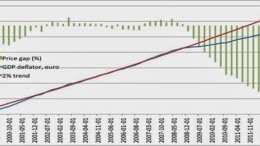
MADRID | By Luis Arroyo | The ECB spoke up on Thursday during one of its most expected conclaves. For months, the European institution had been announcing expansive measures if things didn’t change, and it finally made a move. How should we interpret it? Let’s see first why the central bank had to do something “special.”
MADRID | By JP Marin Arrese | A couple of years ago, Draghi rescued the Euro from its plight. Yesterday, he saved Europe from a protracted economic performance. By delivering more than expected by markets, he changed the rules of the game in monetary policy. His bold rate cut bringing funds hoarded by banking institutions into negative territory seems close to unconventional manoeuvring. His targeted 4-year massive 400 billion liquidity injection will prop up credit to enterprises and individuals, providing a robust boost to growth.
LONDON | Barclays analysts invite you to answer the following question: What action do you expect the ECB to take at its Thursday 5 June meeting? The survey closes at 10am London time on Thursday, 5 June 2014, and the results will be published at noon that day in the NY open edition of this publication.
MADRID | By The Corner | Head of economic analysis at Link Securities Juan José F. Figares explains that if the ECB only reduces interest rates (i.e. intervention and deposit rates), stock markets will plummet since investors’ expectations will not be fulfilled. Should the central bank activate a new conditioned LTRO and open the door to a new asset purchase program, he adds that markets will react neutrally first and then, they will become positive. Note that the Eurozone’s GPD grew only by 0.2% in the 1Q14, according to the Eurostat.
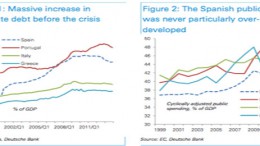
MADRID | The Corner | Assessing Spain’s economic decisions in the years of crisis led Deutsche Bank’s analysts to fix the main five lessons their European counterparts should learn from the country’s experience. One of Madrid’s clearest success was to firstly manage the private sector adjustment then implement fiscal consolidation. All this would not have been possible without the “crucial”, though sometimes “subtle” support from the EU.
LONDON | By Barclays analysts | We announce the end of credit restrictions to the European banking thanks to the latest credit data, which went from -3% yoy to -2.8%. Our market strategist reaches the conclusion that we are seeing signs of lending recovery (see chart).
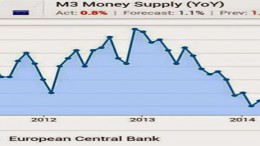
MADRID | By Luis Arroyo | The ECB’s Thursday upcoming meeting will be historical for the EU economy. Any move will mean some easing, even if it will be very difficult that it reactivates the euro zone. What it should definitely do is to massively buy public debt, removing it from financial assets for the banks to find fresh liquid assets as well as capital gains to cover its holes and thus cut interests of private sector’s credit.
MADRID | By Álex García.