
World economy

china recovery

China’s Recipes For Its Most Difficult Year: Margin And Economic Policies

CaixaBank Research | China is responding with economic policy space to deal with the coronavirus. On the one hand, measures will be taken in 1H20 to support the sectors having the greatest difficulties. On the other hand, a significant fiscal stimulus package is expected to provide investment in the 2H20. The set of measures will be beneficial, as they will facilitate a full recovery of China’s economy, although they will also increase the deficit in a country with an already high level of corporate debt (150% of GDP).


V L W recovery

V, W or L: What Shape Will The Recovery Take?

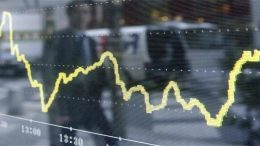
Keith Wade (Schroeders) | The world economy is in the midst of a sudden stop where activity has been brought to a halt by official action to suppress the coronavirus. We have updated our forecasts and see a severe recession in global GDP this year with the downturn concentrated in the second quarter (see here). Although a rapid V-shaped recovery is our central forecast, if Covid-19 lingers there is a risk of a “double-dip” recession.


corporative deb fed

Forced Debt Sales For Companies That Lose Their Investment Grade Starting to Happen In The US

Intermoney | In the case of credit, a situation is already beginning to take shape in the US that worries us quite a bit and which will end up spreading throughout the world. Namely, the forced debt sales for companies that lose their investment grade rating. Currently, this would translate into the closest thing to a sale of balances. This situation has already forced Western Asset, a fixed income manager with $460 billion under management, to apply for a waiver for a Fresno County public employee pension fund.


Kristalina IMF

The IMF Believes The Macro Picture In Some Economies With Covid-19 Is Similar To The Stress Tests’ Worst Case Scenario

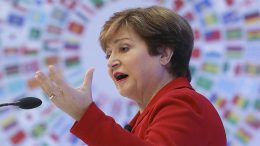
The IMF has recommended a number of measures to the banks’ supervisors to address the coronavirus health crisis. Firstly, it believes it is necessary to keep regulations unchanged and extend the time frame for compliance (Basel IV). It also recommends the use of capital buffers to facilitate operations, as well as providing incentives for lending by making risk management and associated costs (provisions) more flexible in the most affected sectors.


China's one belt, one road initiative

Asian Supply Chains Recover

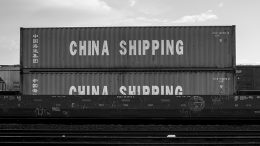
Fidelity | Our analysts report that activity in Asia’s extensive network of factories, ports and logistics centres is accelerating as the Chinese economy leaves the blockade behind. Dockside cranes are once again squeaking in some of Asia’s largest ports as production at Chinese factories progressively speeds up, after several weeks of coronavirus-related disruptions.


Modern monetary theory

Fast forward to MMT, please

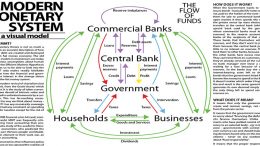
Yves Bonzon (Julius Baer) | We are therefore moving much faster than expected towards a macroeconomic policy cocktail that combines monetary and fiscal policy (Modern Monetary Theory, MMT). In concrete terms, private agents (households and companies) who are currently losing precious income, must be able to continue to pay their bills in order to avoid a credit crunch against which monetary policy, even unconventional, can do nothing in isolation. Offering state guarantees for loans that relieve their immediate cash flow stress is a good solution in the very short term.


Cryptocurrencies turn ten years; 2019 could be the year of tokenization

While coronavirus rages, bitcoin has made a leap towards the mainstream

Iwa Salami via The Conversation | Bitcoin and other cryptocurrencies will probably not be killed off by the COVID-19 crisis or indeed any other market event. With the growing market in crypto lending, these services look pivotally positioned to replace traditional banking services in the coming years. If more countries make similar moves to the ones I’ve highlighted above, crypto-assets could even become entrenched in the financial mainstream very soon.


newyork coronavirus 1

COVID-19: Will We Learn the Lessons?

Daniel Wagner | The West can learn a lot from the response of the governments of China, Singapore and South Korea, which clamped down, instructed their populations to stay at home and ensured that they did so. These governments did not panic or overreact; they simply did not under-react, as America and much of the West have done.


Russian oil 777x400 1

Saudi Arabia And Russia: Who Will Back Down First?

Eirini Tsekeridou (Julius Baer) | Oil prices have declined massively over the last weeks, as Russia and Saudi Arabia could not reach an agreement regarding output cuts. Saudi Arabia is trying to punish Russia, while Russia is seeking to hurt US oil producers due to US sanctioning of Russian companies. US shale producers, especially the highly leveraged ones, will face default as their breakeven price is about USD 50 per barrel.


PMIs plummets

March ‘Flash’ PMIs Dips Into Unchartered Waters

The Covid-19 outbreak leds to the steepest decline in business activity ever recorded in the Eurozone: it plummeted to 31.4 in March against 51.6 in February, a record low since July 1998. Even though manufacturing PMIs fell less than expected, they could have been inflated, once again, by longer supplier delivery times due to supply chain disruptions and thus send an overly optimistic signal, Susan Soho, economist at Julis Baer, explains. Moreover, they are likely to fall further in the coming month, as lockdown measures intensify.